
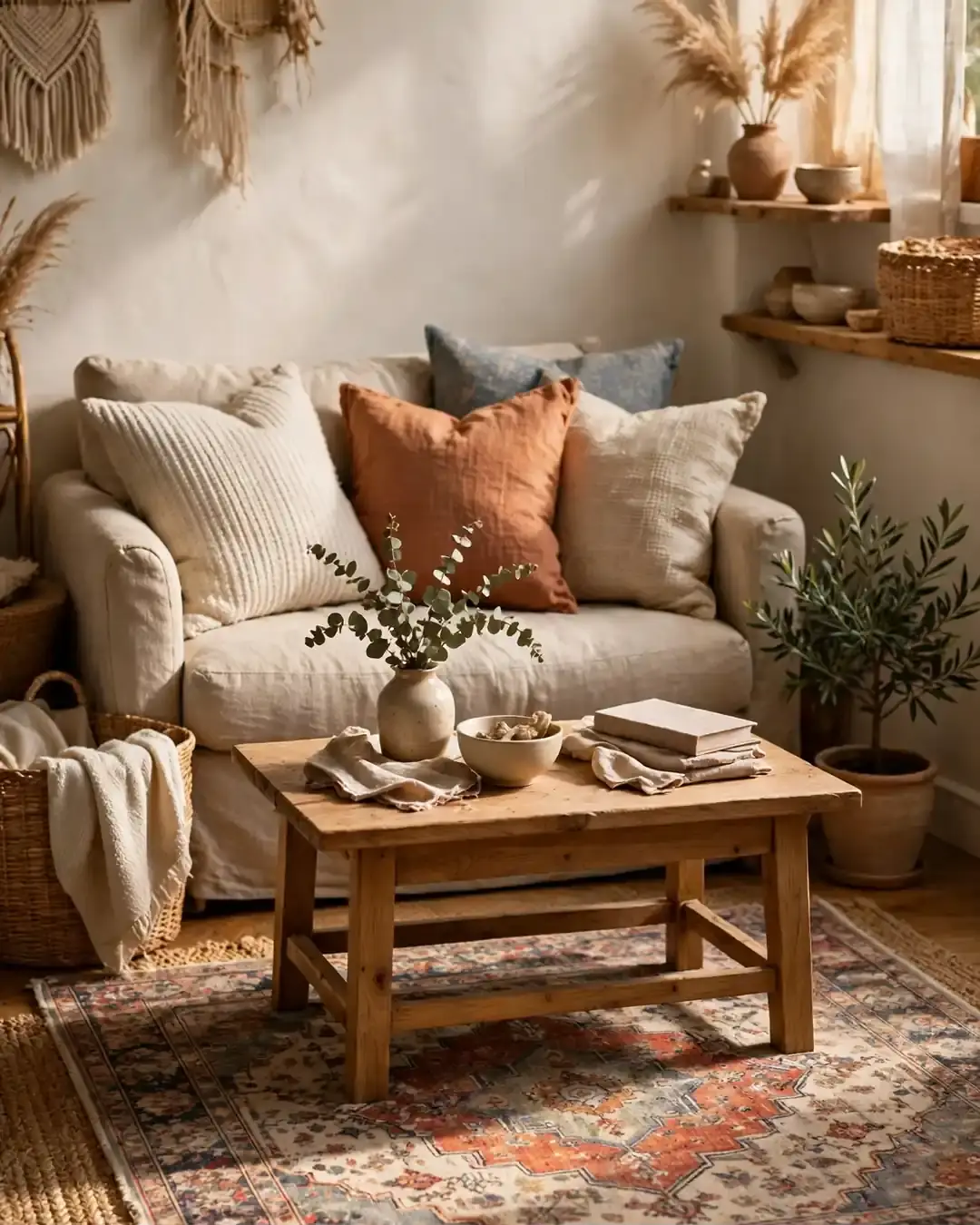
Layered rugs are the fastest way to make a small living room look styled instead of just furnished. One rug says you bought a rug. Two rugs, layered on purpose, say you thought about the room.
These 35 tips cover the whole playbook: the base, the top layer, placement by zone, small-space tricks, and the care that keeps it all looking good. No renovation, no big budget, just rugs used properly.
Phase 1: Start With the Base
Every good stack starts underneath. Get the base wrong and nothing above it sits right.
1. Start With a Big Neutral Jute Base
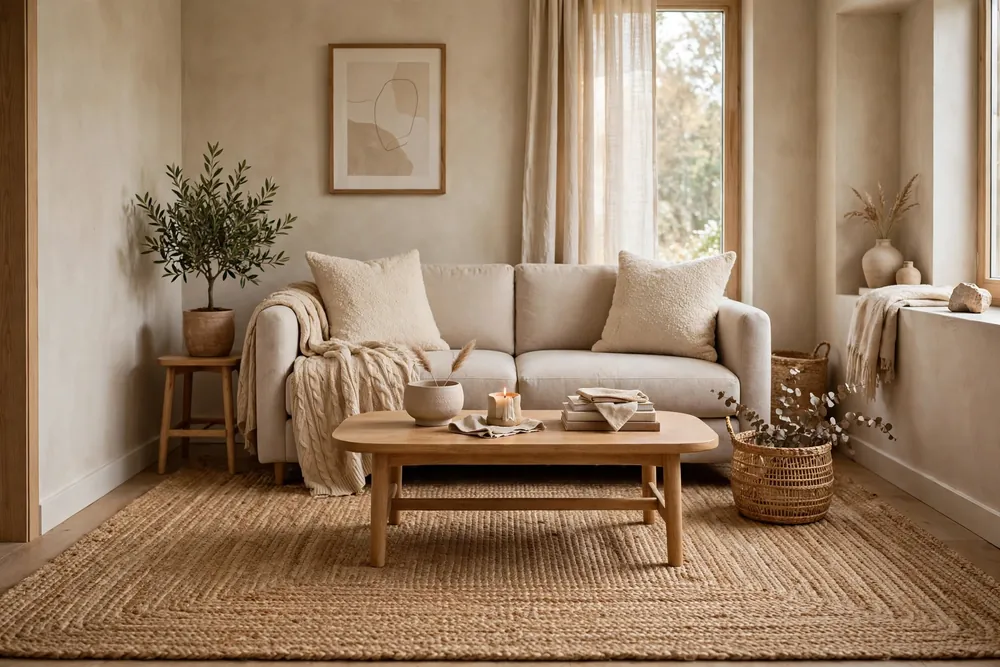
Layering starts underneath. A big natural jute rug calms the whole room and gives every layer above it something to sit on. In a small living room, one calm base beats three competing patterns every time.
✅ Do this: jute or sisal in a natural tone. ❌ Skip this: a loud patterned base that fights the top rug.
2. Size the Base to the Seating Zone, Not the Room
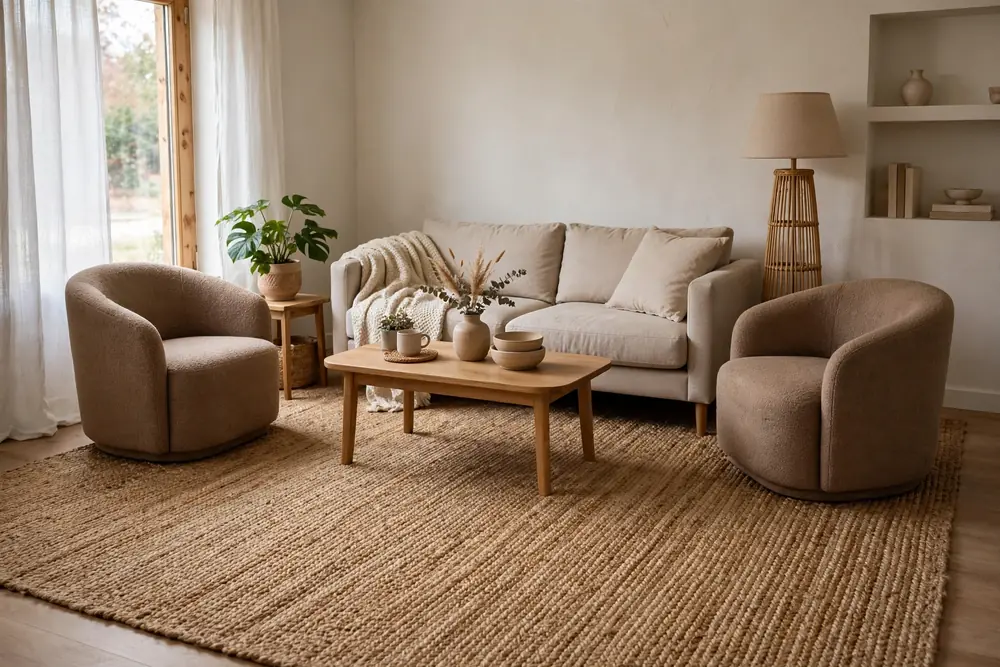
Measure the sofa and chairs, not the walls. The base rug should cover the whole seating group with a little room to spare. A base that stops halfway under the sofa looks like an accident.
✅ Do this: base extends past all seating. ❌ Skip this: a base that only fits under the coffee table.
3. Front Legs On, Back Legs Off
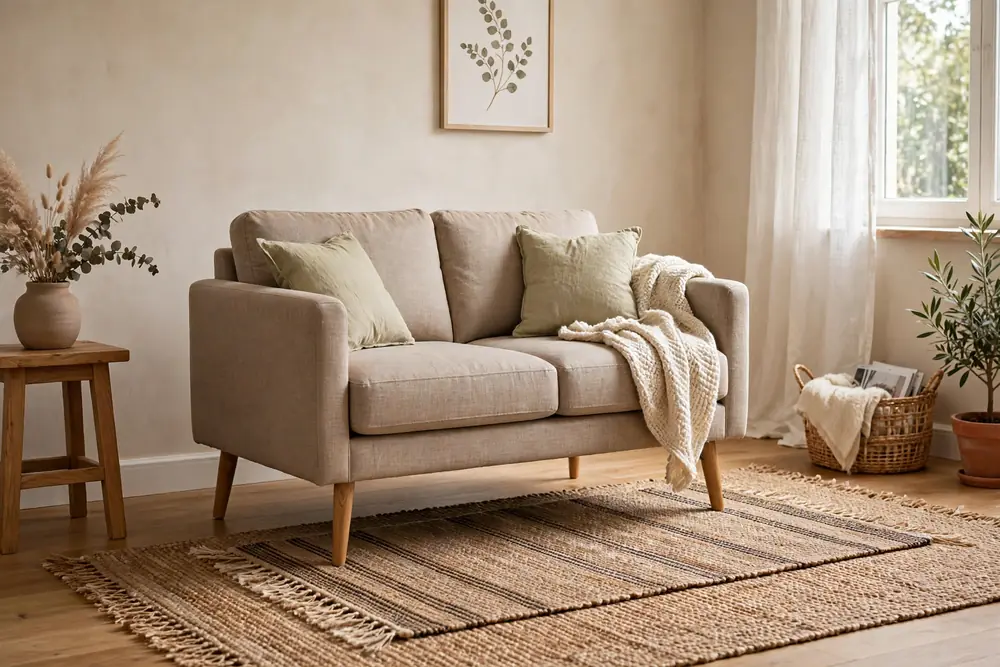
The classic rule still works: front legs of the sofa and chairs on the rug, back legs off. It anchors the furniture without swallowing the room, and it stops the rug sliding every time someone sits down.
✅ Do this: front legs on the rug. ❌ Skip this: all four legs squeezed onto a too-small rug.
4. Choose a Flatweave Base So the Top Rug Sits Flat

A thick shaggy base makes everything above it wobble. Flatweave jute, cotton, or low wool keeps the top rug flat, the coffee table steady, and the whole stack looking intentional instead of lumpy.
✅ Do this: flat, low-pile base. ❌ Skip this: shag under shag.
5. Put a Rug Pad Under the Base
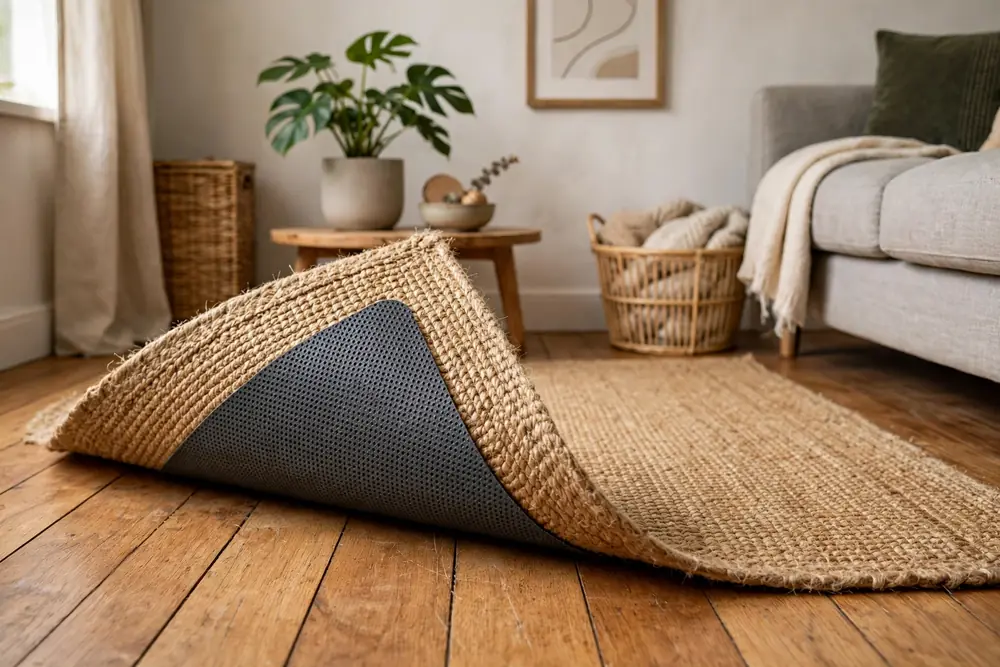
Layered rugs slide, especially on wood floors. A thin non-slip pad under the base layer locks the whole stack in place and adds a little cushion underfoot. It is the cheapest fix in this whole list.
✅ Do this: non-slip pad under the base. ❌ Skip this: bare rug on slick wood.
6. Pick a Washable Base If You Have Pets or Kids
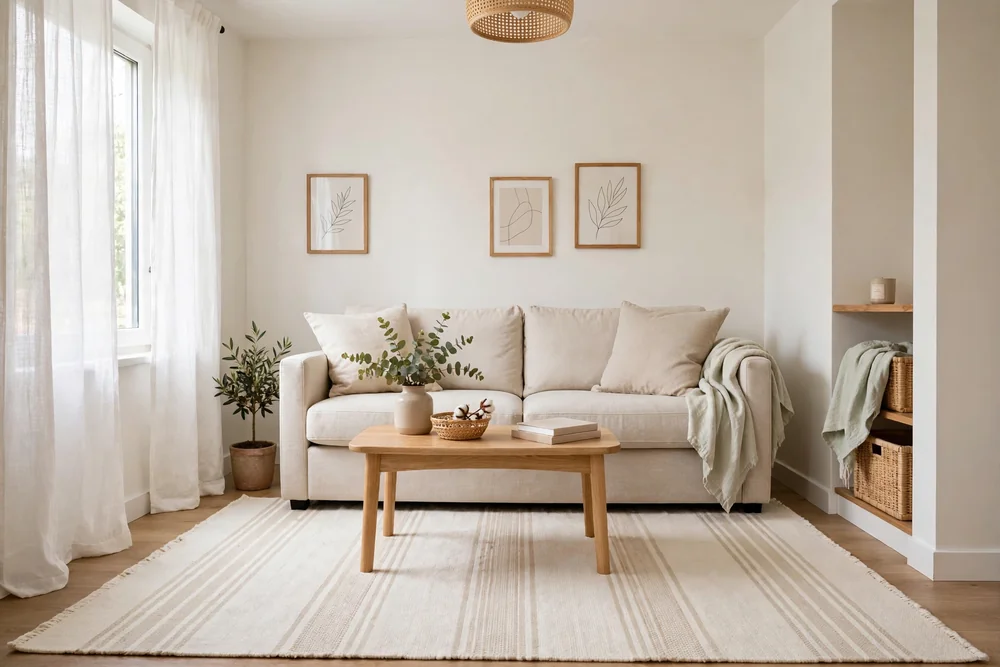
The base layer takes the most traffic, spills, and muddy paws. A washable cotton or indoor-outdoor base means you can throw it in the wash instead of living with the stain. Practical beats precious here.
✅ Do this: machine-washable base. ❌ Skip this: dry-clean-only silk under a dog.
7. Let the Base Run Under the Coffee Table
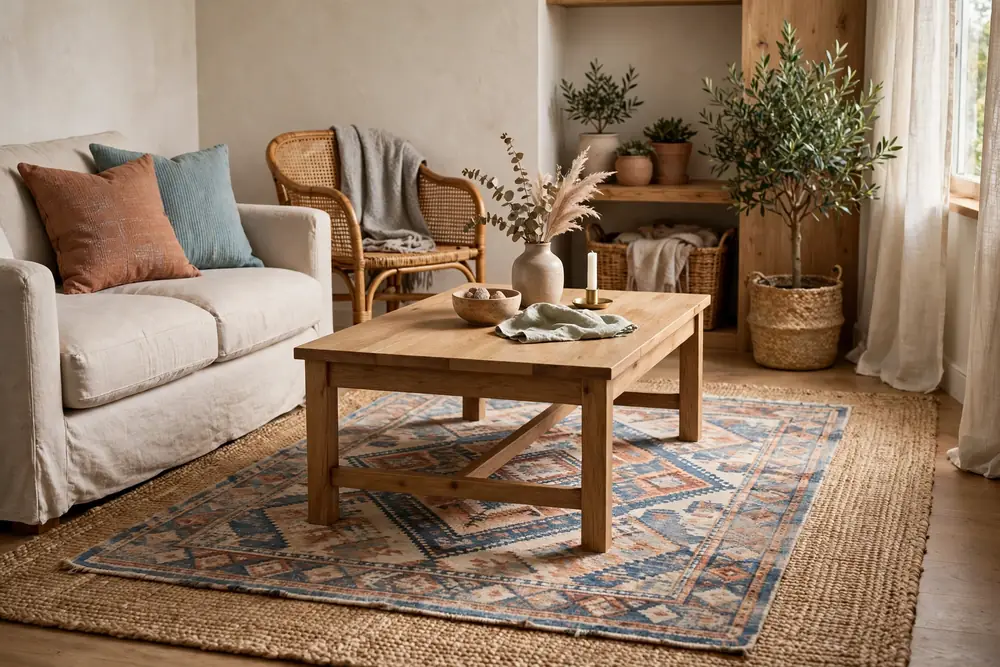
The coffee table should sit fully on the layered rugs, not half on and half off. A base that runs under the table ties the seating group together and stops the table drifting across the room.
✅ Do this: table fully on the rugs. ❌ Skip this: table straddling the rug edge.
Phase 2: Pick the Top Layer
The top layer is where the personality lives. This is the rug people actually notice.
8. Make the Top Rug Clearly Smaller Than the Base
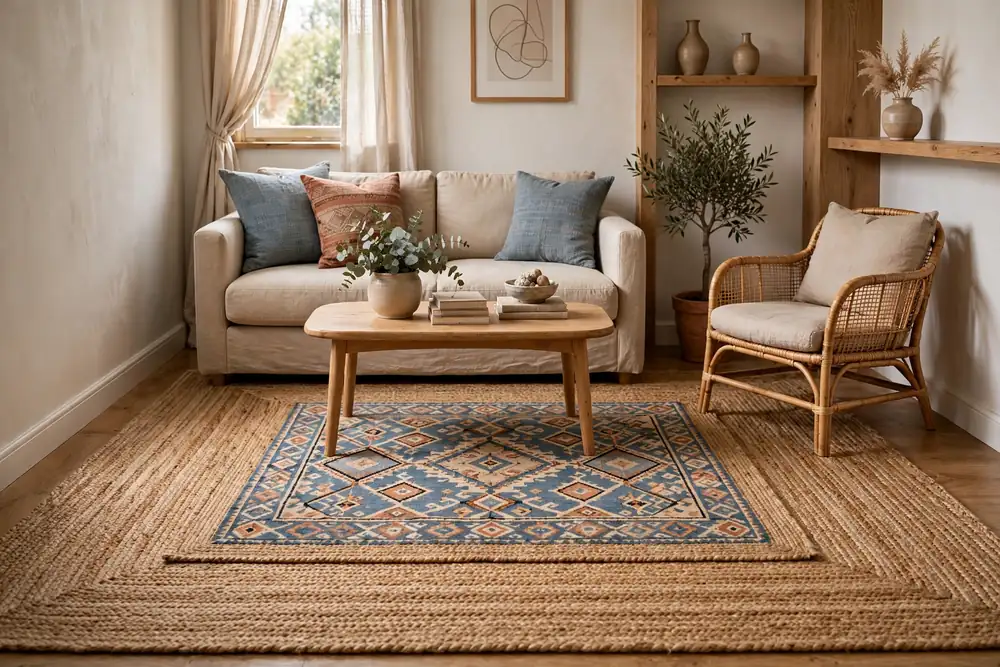
Layering only reads as layering when you can see both rugs. Leave a visible border of base all the way around the top rug, at least a hand’s width. No border, no layering effect.
✅ Do this: clear border of base showing. ❌ Skip this: top rug nearly the same size as the base.
9. Offset the Top Rug Slightly Off-Center

Dead-center layering can look stiff in a small room. Slide the top rug a few inches toward the sofa or the coffee table and the whole arrangement relaxes. It looks styled, not staged.
✅ Do this: slight intentional offset. ❌ Skip this: perfect symmetry that feels formal.
10. Mix Pattern Scales, Not Just Patterns

Two busy patterns fight; two patterns at different scales get along. Pair a large-scale base print with a small, tight top pattern, or a plain base with one bold top print. Scale is the secret.
✅ Do this: one large-scale, one small-scale pattern. ❌ Skip this: two same-size busy prints.
11. Add One Plush or High-Pile Top for Softness

Jute is handsome but nobody wants to sit on it barefoot. One plush wool or high-pile top rug adds the softness your feet actually want, right where you sit. Comfort is the point of the top layer.
✅ Do this: one soft top where feet land. ❌ Skip this: scratchy layers everywhere.
12. Try a Vintage Rug as the Top Layer

A faded vintage rug over a plain base adds instant character no new rug can fake. The worn colors soften a room, and the smaller size of most vintage finds is perfect for layering. Thrift it if you can.
✅ Do this: vintage top over plain base. ❌ Skip this: vintage-on-vintage overload.
13. Pull the Top Rug’s Colors From the Room

The top rug should echo something already in the room: a cushion, the art, the throw. When the colors repeat, the layering looks planned. When they do not, it looks like a rug sale exploded.
✅ Do this: repeat one or two room colors. ❌ Skip this: a random color with no echo.
14. One Bold Top Rug, Rest Quiet

If the top rug shouts, everything else should whisper. A bold top layer works when the base, sofa, and walls stay calm. Two bold layers in a small room is a shouting match.
✅ Do this: one star, supporting cast quiet. ❌ Skip this: bold base plus bold top.
Phase 3: Place by Zone
Rugs do not just cover floors, they mark zones. Place each layer where it earns its keep.
15. Anchor the Sofa Zone First
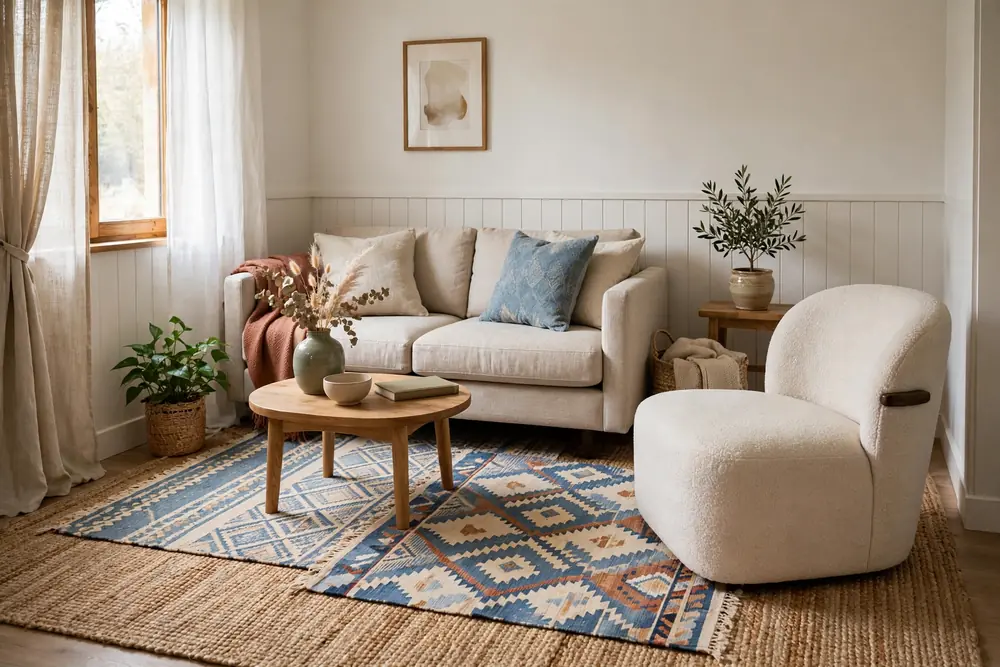
Start layering where you sit most: the sofa. Get the sofa zone right and the rest of the room follows. A well-layered sofa zone makes even a tiny living room feel finished.
✅ Do this: sofa zone layered first. ❌ Skip this: layering the corners before the sofa.
16. Let the Top Rug Define the Coffee-Table Zone

In a small room the top rug can act like a room divider. Center it under the coffee table and it marks the conversation zone, even in an open-plan space. The eye reads it as a room inside the room.
✅ Do this: top rug under the coffee table. ❌ Skip this: top rug floating with no anchor.
17. Layer a Small Rug in the Reading Corner

One armchair plus one small layered rug equals a reading corner. A tiny rug under the chair and a little side table makes a corner feel like a destination instead of leftover space.
✅ Do this: small rug under the reading chair. ❌ Skip this: bare floor under the chair.
Quick checklist: tips 1–17
- Big neutral jute base
- Base sized to the seating zone
- Front legs on, back legs off
- Flatweave base for a flat stack
- Rug pad under the base
- Washable base for pets and kids
- Base running under the coffee table
- Top rug clearly smaller than the base
- Top rug slightly off-center
- Mixed pattern scales
- One plush top for softness
- Vintage rug as the top layer
- Top rug colors pulled from the room
- One bold top rug, rest quiet
- Sofa zone anchored first
- Top rug defining the coffee-table zone
- Small rug in the reading corner
18. Use a Runner to Connect Living Room to Entry

A runner from the entry into the living room pulls the eye through the space and makes a small apartment feel longer. It is layering as a pathway, not just a pile.
✅ Do this: runner linking entry and living room. ❌ Skip this: a rug that stops dead at the doorway.
19. Layer Under a Dining Edge Only If Chairs Still Slide

If the living room bleeds into a dining corner, a layered rug can mark the edge. But test it: dining chairs must slide in and out without catching. If they catch, the layer is too thick.
✅ Do this: thin layers near dining chairs. ❌ Skip this: thick pile where chairs drag.
20. Soften a Fireplace Hearth With a Small Layered Rug
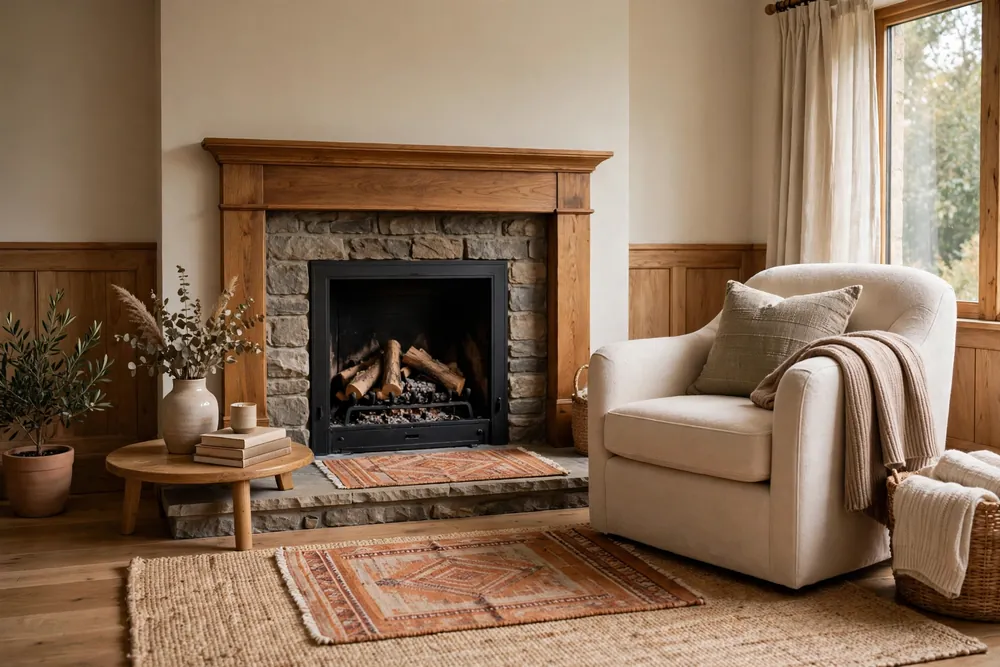
A bare hearth is hard and cold. A small rug layered in front of it softens the whole wall and gives you somewhere warm to stand. Keep it clear of the firebox itself, obviously.
✅ Do this: small rug in front of the hearth. ❌ Skip this: rug touching the firebox.
21. Use Layering to Mark an Open-Plan Boundary

No walls? Rugs are your walls. A layered rug stack marks where the living room ends and the dining or work zone begins, without a single piece of furniture moved.
✅ Do this: rug stack as a boundary line. ❌ Skip this: one rug drifting across two zones.
Phase 4: Small-Space Tricks
Small rooms have awkward floors: carpet, strips, stains. These tricks turn problems into layers.
22. Layer on Top of Wall-to-Wall Carpet
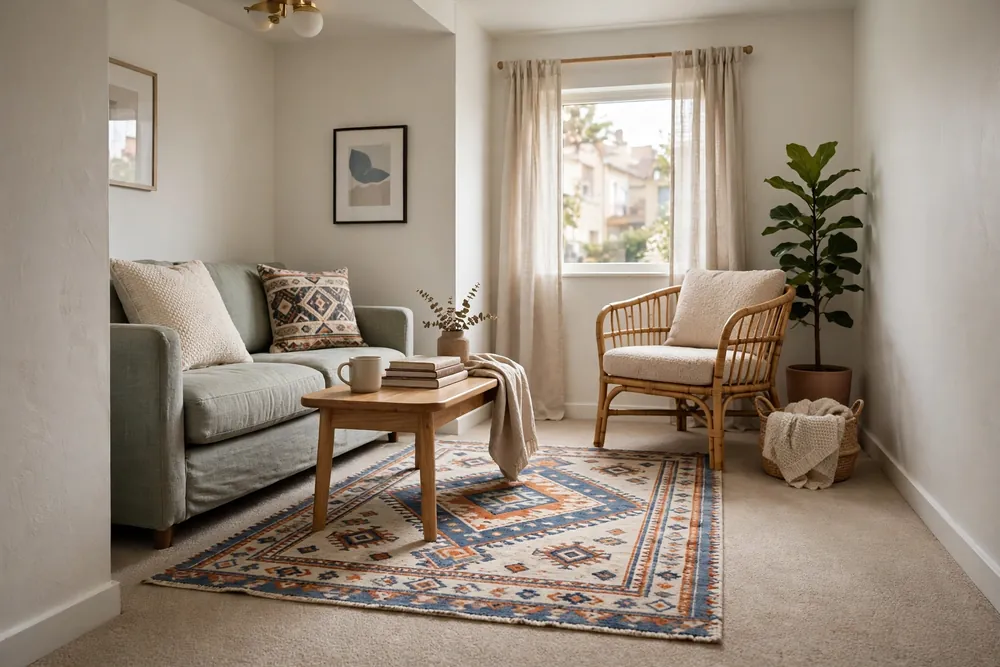
Yes, you can layer on carpet. A flat base does not exist here, so go straight to a low-pile top rug with a grippy pad. It adds color and pattern to rental beige carpet instantly.
✅ Do this: low-pile top rug with grip pad on carpet. ❌ Skip this: thick rug sliding on carpet.
23. Round Rug Over a Rectangle Base

A round top rug over a rectangular base breaks up all the straight lines in a small room. It softens the sofa’s corners and makes the coffee-table zone feel intentional. Shape contrast is free style.
✅ Do this: round top, rectangle base. ❌ Skip this: every rug the same shape.
24. Run a Runner as a Top Layer Down the Sofa Side

A narrow runner along the sofa side adds a stripe of pattern where a full rug will not fit. It is layering for the awkward strip of floor every small living room has.
✅ Do this: runner down the sofa side. ❌ Skip this: leaving the side strip bare.
25. Hide a Stain by Layering Over It

The base rug has a stain you cannot shift? Layer a smaller rug right over it. This is the oldest rug trick in the book and it works every time. Just keep the top rug big enough to cover it fully.
✅ Do this: top rug fully covering the stain. ❌ Skip this: top rug smaller than the stain.
26. Small Rug Over a Big Rug to Fake a Custom Size

Cannot find the exact size you need? Layer a smaller rug over a bigger one and the eye reads the top rug’s size as the rug’s size. It is custom sizing without the custom price.
✅ Do this: top rug sized to the zone you want. ❌ Skip this: two rugs both the wrong size.
27. Tape-Free Anchoring: Let Furniture Feet Do the Work

Rug tape leaves residue and renters hate it. Instead, put sofa feet, chair feet, and the coffee table on the rug edges. Weight anchors better than tape, and it costs nothing.
✅ Do this: furniture feet on rug edges. ❌ Skip this: tape on rental floors.
28. Leave Bare Floor Showing Around the Edges
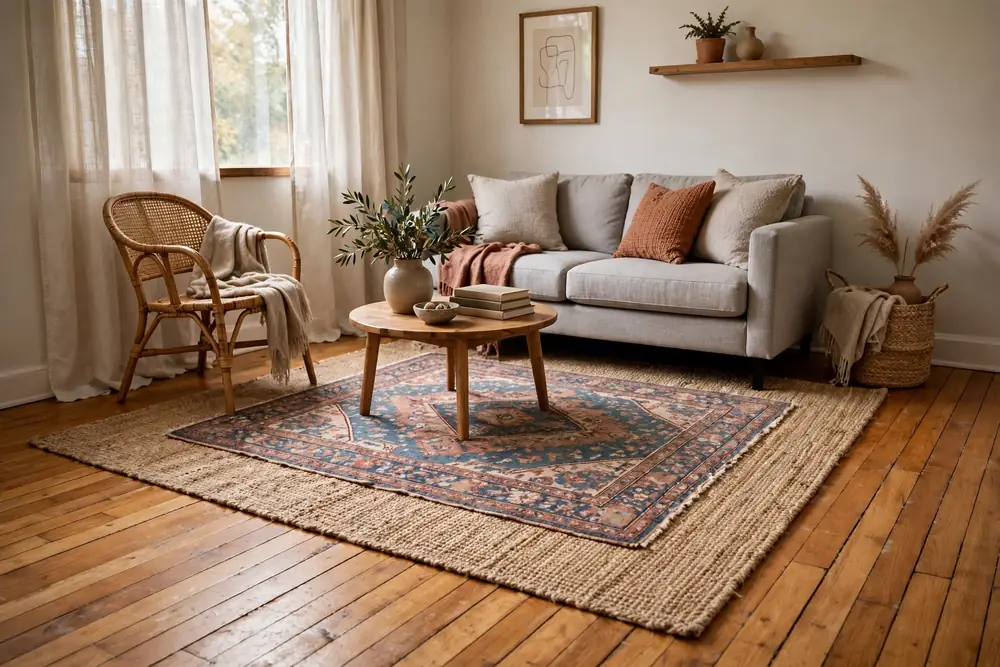
Wall-to-wall rug coverage shrinks a small room. Leave a border of bare floor around the rug stack and the room breathes. The floor frame makes the rugs look bigger, not smaller.
✅ Do this: bare floor border around rugs. ❌ Skip this: rug edge to skirting board.
Phase 5: Care, Budget, Finishing
Layering is not done when the rugs go down. Care and editing keep the stack looking good.
29. Vacuum Layers Separately, Top First
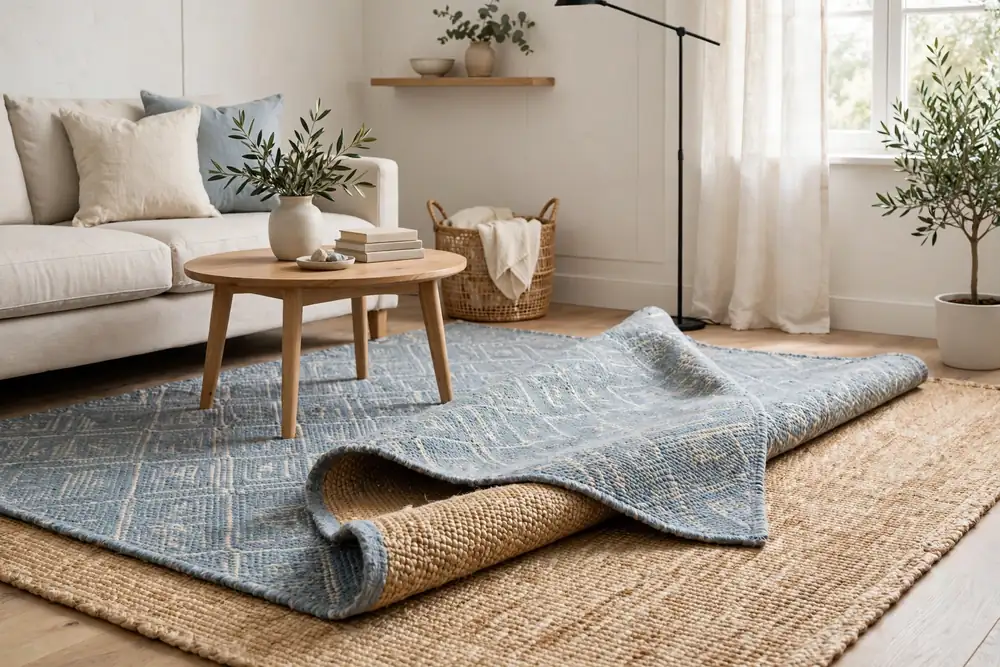
Layered rugs trap dust between layers. Lift the top rug, vacuum both sides, then vacuum the base. Two minutes extra, and the stack stays fresh instead of musty.
✅ Do this: vacuum each layer separately. ❌ Skip this: vacuuming only the top.
30. Rotate the Top Rug Every Season
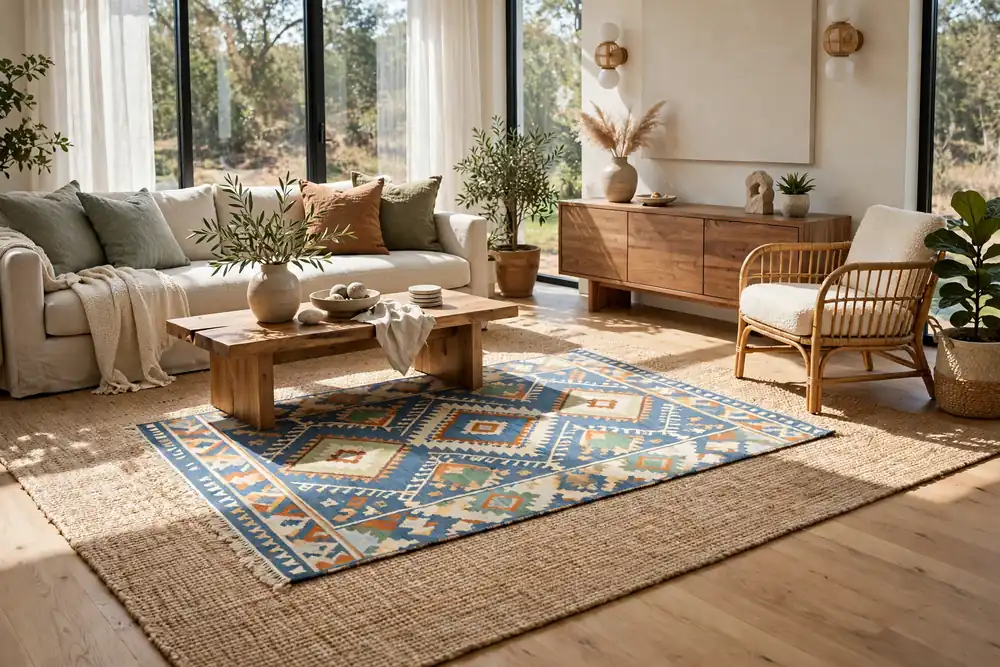
Sun fades one side, feet wear one path. Rotate the top rug a quarter turn each season and it wears evenly. The base barely moves, so the whole stack lasts twice as long.
✅ Do this: quarter turn each season. ❌ Skip this: same rug, same spot, for years.
31. Swap Only the Top Layer for a Seasonal Change

New season, new look, no new base rug. Swap just the top layer: a warm wool top for winter, a light cotton one for summer. One rug changes the whole room.
✅ Do this: seasonal top-layer swap. ❌ Skip this: replacing the whole stack yearly.
32. Thrift the Top Rug, Invest in the Base
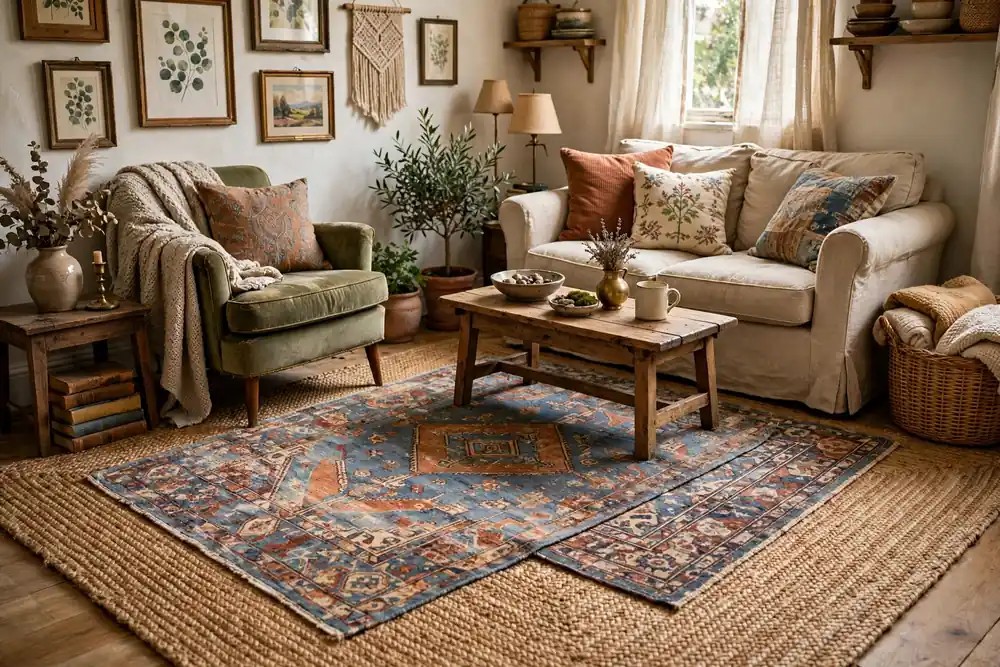
The base takes the beating, so spend there. The top rug is the fashion piece: thrift it, swap it, experiment. Your budget goes further when the splurge and the save are in the right layers.
✅ Do this: quality base, thrifted top. ❌ Skip this: cheap base that curls in a month.
33. Add Tassels or Fringe for a Finished Edge
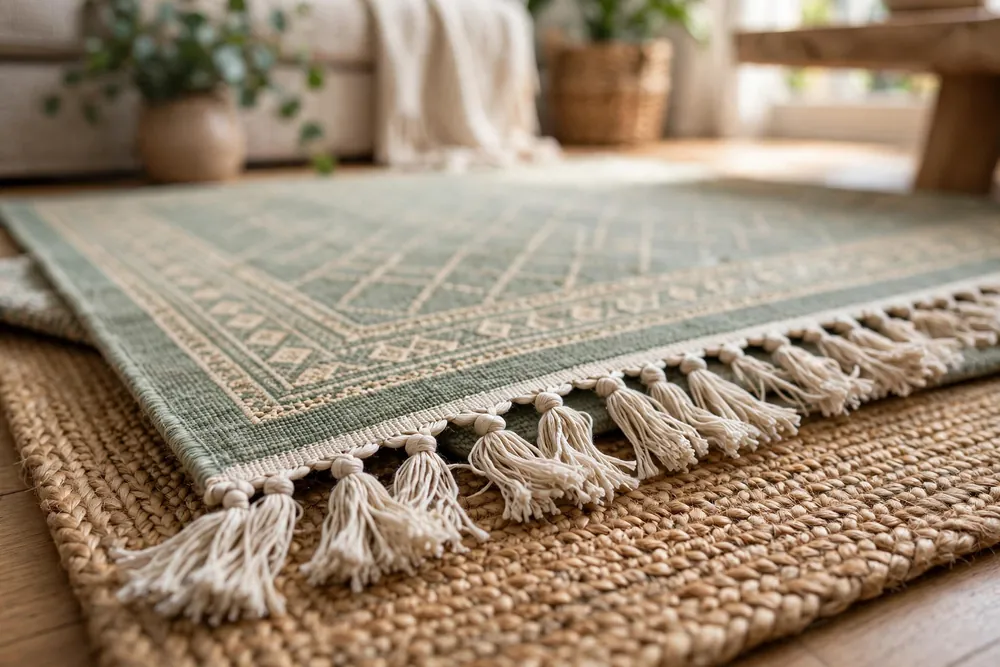
A top rug with tassels or fringe looks finished without any extra styling. The fringe draws the eye to the layer edge, which is exactly where you want people to look. Small detail, big payoff.
✅ Do this: tasselled top rug edge. ❌ Skip this: fraying edges that look worn out.
34. Measure Twice: Door Clearance Before Layering
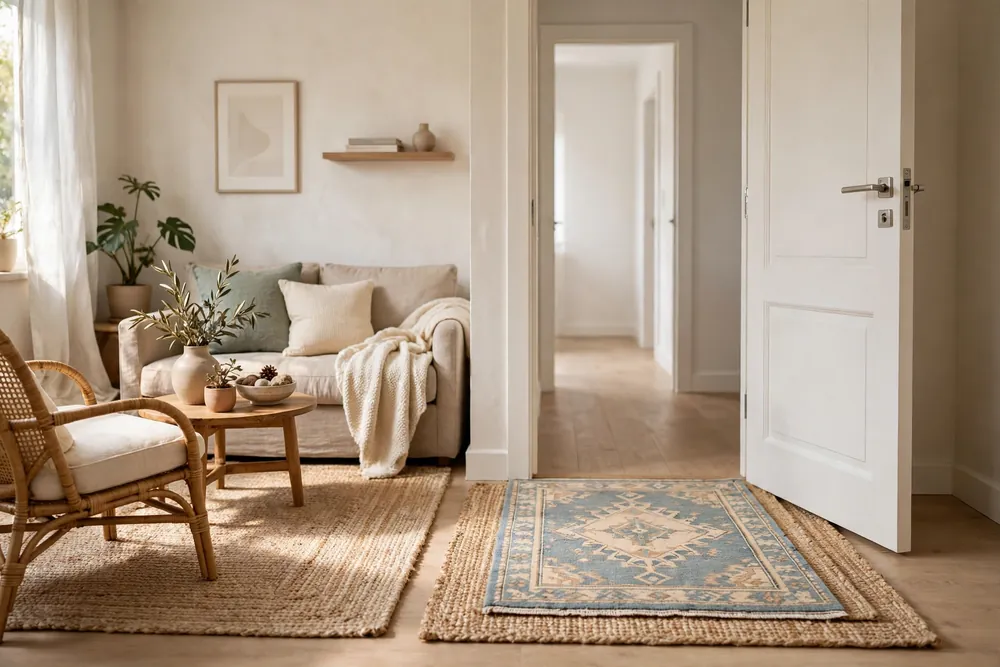
Two layers plus a rug pad can lift the floor enough to block a door. Measure the door gap before you stack. A rug that stops a door is a rug you will trip over daily.
✅ Do this: check door swing over the stack. ❌ Skip this: thick stack by a swinging door.
35. Step Back and Edit: If It Looks Busy, Remove One Layer

The final tip is the hardest: edit. Step back and look. If the stack feels busy, take one layer away. Two good layers beat three fighting ones, every single time.
✅ Do this: edit down to two layers if busy. ❌ Skip this: adding more to fix more.
Closing checklist: all 35, ready to layer
- Big neutral jute base
- Base sized to the seating zone
- Front legs on, back legs off
- Flatweave base for a flat stack
- Rug pad under the base
- Washable base for pets and kids
- Base running under the coffee table
- Top rug clearly smaller than the base
- Top rug slightly off-center
- Mixed pattern scales
- One plush top for softness
- Vintage rug as the top layer
- Top rug colors pulled from the room
- One bold top rug, rest quiet
- Sofa zone anchored first
- Top rug defining the coffee-table zone
- Small rug in the reading corner
- Runner connecting living room to entry
- Thin layers where dining chairs slide
- Small rug softening the hearth
- Layering marking the open-plan boundary
- Layering over wall-to-wall carpet
- Round rug over a rectangle base
- Runner down the sofa side
- Stain hidden under a top layer
- Small over big to fake a custom size
- Furniture feet anchoring, no tape
- Bare floor border around the edges
- Layers vacuumed separately
- Top rug rotated every season
- Only the top layer swapped seasonally
- Thrifted top, quality base
- Tassels or fringe for a finished edge
- Door clearance measured first
- Edited back when it looks busy
Start with the base, pick one top layer you love, and stop when the room feels done. For more small living room ideas, read 18 Cozy Small Living Room Ideas That Feel Warm, Not Crowded and 21 Christmas Decor Ideas for Small Living Rooms That Feel Magical. For more rooms, browse Small Apartment Decor and the blog.