

Walk into any paint shop with me and I do the same thing every time. I head straight for the whites, hold up five swatches that look identical, and start talking about light like it is my favourite hobby. Colour is my happy place, and small rooms are where it works hardest.
These thirty ideas are the colours I reach for again and again in small apartments. Pale walls, one clever accent, a ceiling that disappears, and a rug that keeps the floor light. Pick the ones that fit your rooms, test them in daylight, and watch your flat breathe.
Your small apartment colour plan in 6 steps:
- Morning one: clear one wall, wash it, and stick up your pale swatches.
- Morning two: look at the swatches in daylight, lamplight, and morning light.
- Afternoon: paint the ceiling first, then the walls, then the trim.
- Evening: roll the pale rug out and hang the mirror opposite the window.
- Next morning: bring in the sofa, the cushions, and the one accent colour.
- Then live in it: light walls, one accent, and a room that feels bigger every day.
1. Start With Bright White Walls

White is the oldest trick in the paint shop, and it still wins. It bounces daylight into every corner, it makes the walls look further away, and it lets your furniture do the talking. If your flat feels boxy, white opens it up fastest.
💡 Tip: Paint one wall first and live with it for a day. If it glows at noon and still feels soft at night, you have your white.
2. Pick a Soft Warm White, Not a Stark One
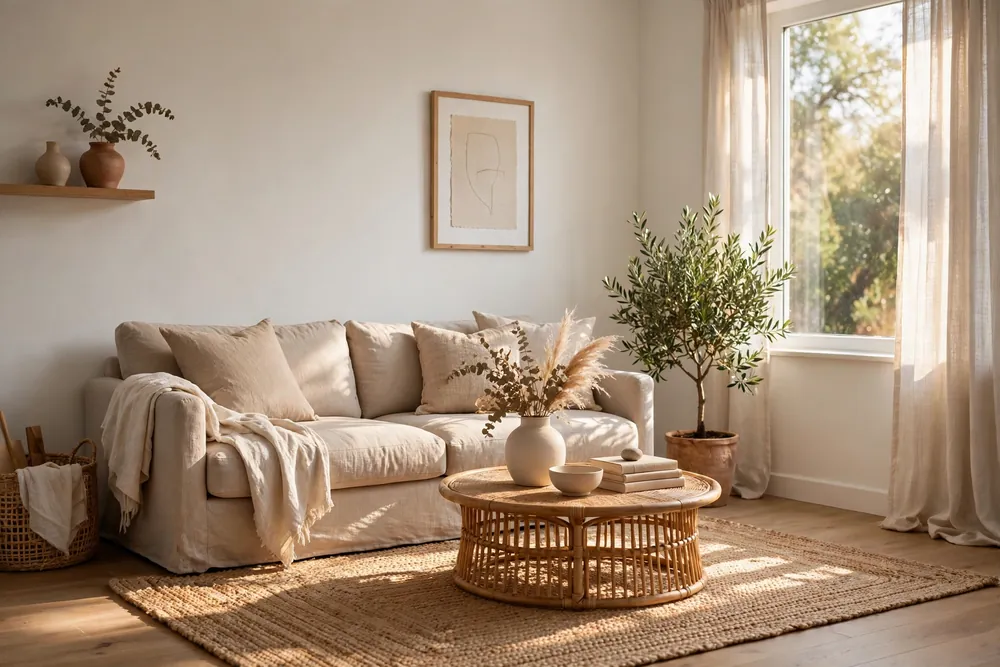
Stark white can feel cold, almost clinical, in a room with little sun. A soft warm white keeps the brightness and adds a gentle glow. For the science, this paint colors that make a room feel bigger guide from Bobby Berk explains light reflectance beautifully.
💡 Tip: Hold the swatch against a white sheet of paper. If it looks creamy next to the paper, it is warm. If it looks blue, keep shopping.
3. Paint Every Wall the Same Pale Colour

One colour on every wall means no visual stopping points. The eye glides around the room instead of bumping into corners, and the whole space reads as one calm stretch. It is the simplest way to make a small flat feel continuous.
💡 Tip: Use the same colour in the bedroom and the living room too. Matching rooms make a small flat feel like one big room.
4. Keep the Ceiling White and Lighter Than the Walls
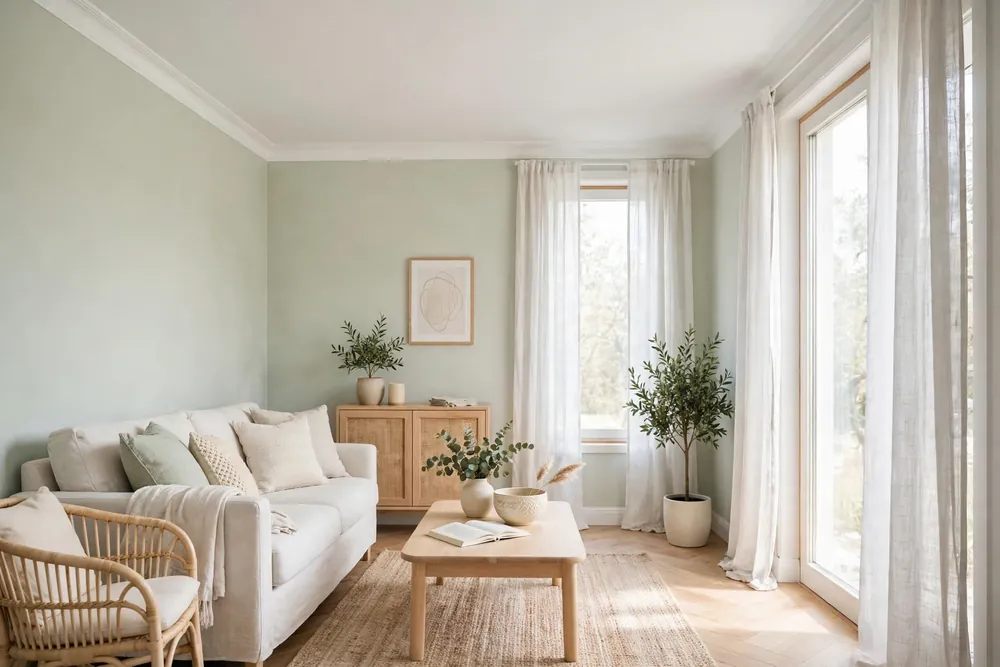
A ceiling painted the same pale shade as the walls, or one shade lighter, removes the visual lid on the room. The eye travels up without hitting a hard line, and low ceilings suddenly feel a foot taller.
💡 Tip: Never paint a small ceiling dark. Dark above you presses the whole room down.
5. Try Pale Sage Green in the Living Room

Sage is my favourite green for small rooms. It is soft, earthy, and it makes the walls feel like they recede instead of closing in. Pair it with cream cushions and light wood, and the room feels like a calm garden.
💡 Tip: Test sage on the wall that gets the least sun. If it still looks fresh there, it will glow everywhere else.
6. Paint the Bedroom Soft Sky Blue

Pale blue is the colour of open sky, and your brain knows it. Walls in soft sky blue look further away than they are, which is exactly what a small bedroom needs. White bedding keeps it light, and light wood keeps it warm.
💡 Tip: Keep the blue pale and a little grey. A bright blue shouts, a pale blue whispers, and small rooms love a whisper.
7. Let Blush Pink Play Neutral

Blush is not just for nurseries, I promise. A soft blush pink reads as a warm neutral on the wall, it flatters skin tones, and it bounces light beautifully. It is the prettiest way to warm up a white box of a room.
💡 Tip: Pair blush walls with cream linen and pale wood. The pink stays soft, and nothing in the room competes with it.
8. Add One Deep Accent Wall for Depth

One deep wall, navy or forest green, can actually make a room feel bigger. The dark colour blurs the edges of the room, the corners disappear, and the wall seems to sit further back. Keep the other three walls pale.
💡 Tip: Put the deep colour on the wall you face least. It adds depth behind you without looming over the sofa.
9. Paint Trim and Doors the Same White as the Walls

High contrast trim chops a small room into pieces. When the skirting, the doors, and the walls share one white, the eye reads the whole room as one continuous space, and every edge quietly disappears.
💡 Tip: Use the same white in satin on the trim and flat on the walls. Same colour, different sheen, lovely depth.
10. Choose a Light Warm Grey

Grey got a bad name from all those cold blue greys, but a warm grey is a different animal. It is soft, it reflects light, and it lets colourful cushions shine. Think warm clouds, not storm clouds.
💡 Tip: Check the undertone in daylight. If the grey turns purple under your lamps, it is too cool for your room.
Ideas 1 to 10, quick recap:
- Start With Bright White Walls
- Pick a Soft Warm White, Not a Stark One
- Paint Every Wall the Same Pale Colour
- Keep the Ceiling White and Lighter Than the Walls
- Try Pale Sage Green in the Living Room
- Paint the Bedroom Soft Sky Blue
- Let Blush Pink Play Neutral
- Add One Deep Accent Wall for Depth
- Paint Trim and Doors the Same White as the Walls
- Choose a Light Warm Grey
11. Stretch the Hallway With a Pale Colour

Hallways are the skinniest rooms in any flat, and dark paint makes them feel like tunnels. A pale cream on the walls, a light runner, and a round mirror at the end stretch the hall out like magic.
💡 Tip: Paint the hallway the same colour as the living room. One colour flowing through both rooms makes the flat feel longer.
12. Match the Sofa to the Wall Colour

A sofa that matches the wall colour almost disappears into the room, and that is the point. With no big dark block breaking up the space, the floor looks longer and the room feels wider. Cushions add the contrast instead.
💡 Tip: If a matching sofa feels too plain, add cushions one shade darker than the wall. Same family, gentle contrast.
13. Layer Tone on Tone Bedding in Pale Shades

Cream sheets, a blush throw, a white duvet, all in the same pale family. Tone on tone bedding keeps the bed from becoming one big dark block, and the whole bedroom feels lighter and calmer.
💡 Tip: Keep the darkest layer the smallest one. A thin folded throw at the foot of the bed is enough.
14. Go Light Underfoot With a Pale Rug

A pale rug lifts the whole floor. It reflects light upward, it makes the floor look wider, and it ties pale furniture together. In a small room, the rug is doing as much work as the paint.
💡 Tip: Choose a rug one shade lighter than your floor. The contrast is gentle, and the room still feels grounded.
15. Hang a Big Mirror Opposite a Light Wall

A big mirror opposite a pale wall doubles the light in the room. It bounces the window light back across the space, and it gives the eye somewhere to travel. One large mirror beats four small ones every time.
💡 Tip: Hang the mirror so it reflects the window, not a blank wall. Reflected sky is worth twice the glass.
16. Choose Sheer White Curtains

Heavy curtains eat light and shrink a window. Sheer white curtains soften the daylight without blocking it, and the window looks taller and wider behind them. The room stays bright from morning to evening.
💡 Tip: Hang sheers from the ceiling line, not the window frame. The extra length makes the window look grand.
17. Paint Built In Shelves the Wall Colour

Shelves painted the wall colour blend into the room instead of sticking out. Books and plants still show, but the furniture itself disappears, and the wall looks longer and calmer.
💡 Tip: Paint the back of the shelf one shade lighter than the wall. It adds depth without adding contrast.
18. Warm the Kitchen With Pale Butter Yellow
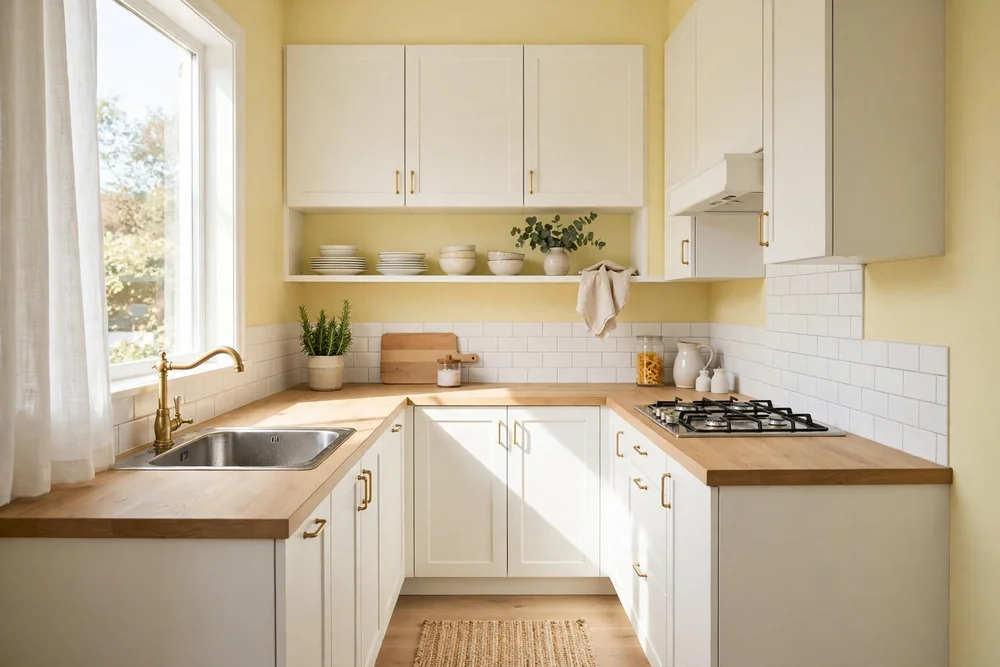
A tiny kitchen with no window needs sunshine from a tin. Pale butter yellow is cheerful, it reflects light, and it makes white cabinets glow. Keep it pale and creamy, never neon, and the kitchen feels like morning.
💡 Tip: Try the yellow on one wall first. If it feels like sunshine at 7am, paint the rest.
19. Keep One Colour Family Across Open Plan Rooms

Open plan flats feel bigger when the living room and the dining corner share one pale colour family. Cream, beige, and light wood flow from one zone to the next, and the eye never hits a border.
💡 Tip: Change the texture, not the colour, between zones. A woven rug here, a linen cushion there, same family throughout.
20. Cover a Dark Floor With a Pale Rug

Dark floors are beautiful, but they can make a small room feel heavy. A large pale rug over the dark wood lifts the floor, reflects the light, and makes the room feel airy again.
💡 Tip: Let a little dark floor show around the rug edges. The frame keeps the rug from floating.
Ideas 11 to 20, quick recap:
- Stretch the Hallway With a Pale Colour
- Match the Sofa to the Wall Colour
- Layer Tone on Tone Bedding in Pale Shades
- Go Light Underfoot With a Pale Rug
- Hang a Big Mirror Opposite a Light Wall
- Choose Sheer White Curtains
- Paint Built In Shelves the Wall Colour
- Warm the Kitchen With Pale Butter Yellow
- Keep One Colour Family Across Open Plan Rooms
- Cover a Dark Floor With a Pale Rug
21. Pick a Satin Finish to Bounce the Light

Paint finish matters as much as colour. A satin finish bounces light softly around the room, while flat paint soaks it up. In a small room, that extra bounce is free space.
💡 Tip: Use satin on the walls and flat on the ceiling. The ceiling stays calm, the walls do the glowing.
22. Paint the Radiator the Wall Colour

A white radiator on a sage wall sticks out like a sore thumb. Paint it the wall colour and it vanishes. One less visual interruption, one calmer room.
💡 Tip: Use heat resistant radiator paint in the same shade. Regular paint can yellow with the heat.
23. Use Pale Blue Grey in a Tiny Bathroom

Tiny bathrooms love pale blue grey. It feels clean, it reflects the mirror light, and it makes white fixtures look brighter. The walls recede, the mirror doubles the space, and suddenly the bathroom breathes.
💡 Tip: Keep the grout pale too. Dark grout lines chop a small tiled wall into a grid.
24. Keep Kitchen Cabinets White or Cream

White cabinets are the small kitchen’s best friend. They reflect every bit of light, they make the worktops look wider, and they never fight with the wall colour. Cream is the warmer cousin if white feels too sharp.
💡 Tip: Paint the uppers and lowers the same colour. Two tone cabinets chop a small kitchen in half.
25. Repeat One Accent Colour in Three Places
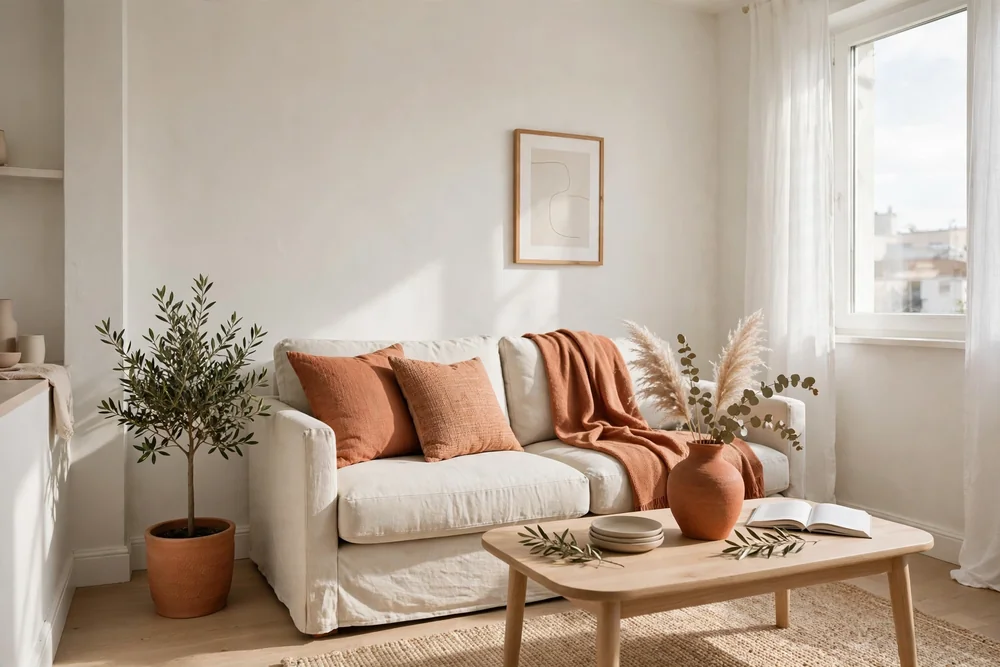
One accent colour, repeated three times, ties a room together. Terracotta cushions, a terracotta vase, a terracotta throw. The eye travels from one to the next, and the room feels connected and bigger.
💡 Tip: Keep the accent to about ten percent of the room. More than that and the accent becomes the boss.
26. Choose a Light Linen Sofa With Pale Cushions
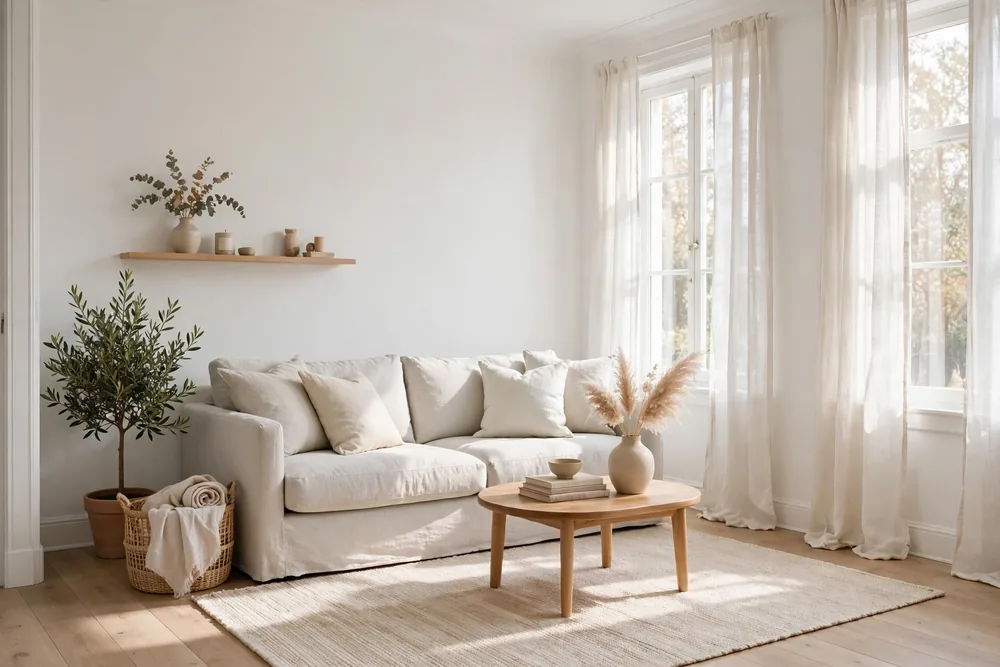
A light linen sofa is like a pale wall you can sit on. It reflects light, it never dominates the room, and pale cushions keep it soft. Dark sofas swallow light, light sofas share it.
💡 Tip: Pick washable linen covers. Light sofas and real life mix best when the covers come off.
27. Paint the Inside of a Bookshelf a Pale Accent

The back panel of a bookshelf is a tiny canvas. Paint it pale sage or soft blue and the shelf gains depth without shouting. Books pop against it, and the wall behind feels further away.
💡 Tip: One shelf is enough to test. If you love it, paint the rest next weekend.
28. Try Soft Lavender in a Small Bedroom

Lavender is calm in a bottle. A soft lavender bedroom feels quiet and restful, the walls recede gently, and white bedding keeps it fresh. It is the colour of good sleep and slow mornings.
💡 Tip: Keep lavender pale and a touch grey. A sugary lilac can feel too sweet by lamplight.
29. Use Warm Terracotta on a Single Accent Wall
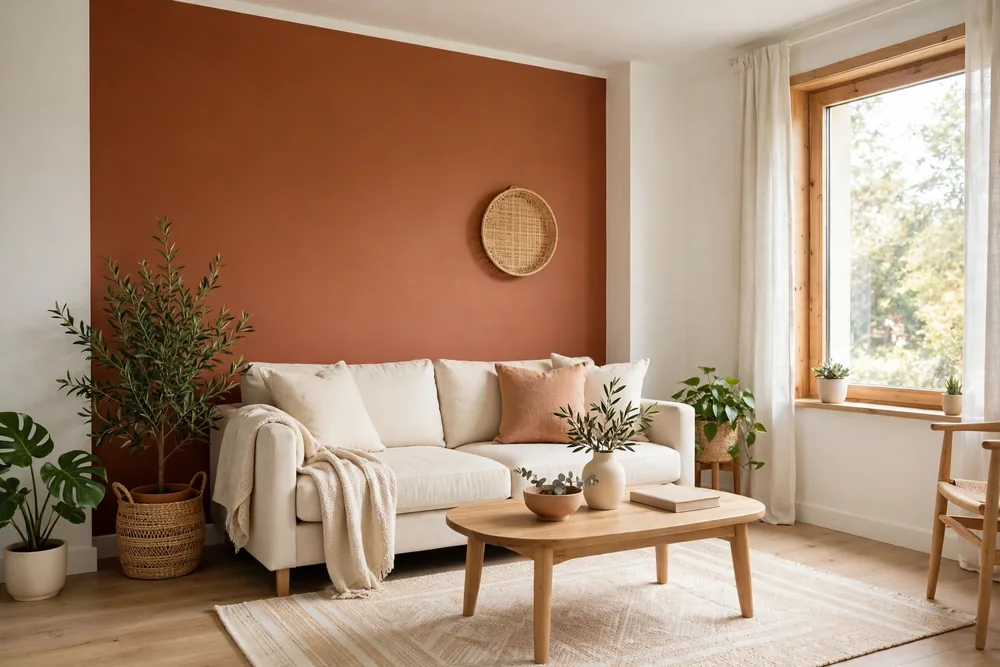
Terracotta is sunshine baked into clay. One warm terracotta wall behind a cream sofa makes the room glow, and the other pale walls keep it open. It is the cosiest accent a small room can wear.
💡 Tip: Balance terracotta with plenty of cream and light wood. Warmth needs breathing room around it.
30. Test Paint Samples in Daylight First

Every colour changes with the light, and small rooms change the most. Test your samples on the wall, look at them at noon and at dusk, and only then buy the tin. The swatch in the shop is lying to you, kindly.
💡 Tip: Paint a big square, not a tiny patch. A hand sized sample tells the truth, a stamp sized one does not.
Ideas 21 to 30, quick recap:
- Pick a Satin Finish to Bounce the Light
- Paint the Radiator the Wall Colour
- Use Pale Blue Grey in a Tiny Bathroom
- Keep Kitchen Cabinets White or Cream
- Repeat One Accent Colour in Three Places
- Choose a Light Linen Sofa With Pale Cushions
- Paint the Inside of a Bookshelf a Pale Accent
- Try Soft Lavender in a Small Bedroom
- Use Warm Terracotta on a Single Accent Wall
- Test Paint Samples in Daylight First
That is the full list! Thirty colours, one small flat, and a home that finally feels like it has room to breathe. Start with the whites, add one accent you love, and let the light do the rest.
Frequently Asked Questions
What is the best colour to make a small apartment look bigger?
Bright white or a soft warm white is the safest answer. Light colours reflect daylight around the room, the walls look further away, and the whole flat feels open. Add one pale accent, sage or sky blue, if plain white feels too bare.
Can dark colours ever make a small room look bigger?
Yes, but only as one accent wall. A single deep wall in navy or forest green blurs the corners and makes that wall seem further back. Painting all four walls dark in a small room with little light usually has the opposite effect.
Should I paint the ceiling the same colour as the walls?
Yes, the same colour or one shade lighter works best. It removes the hard line where the wall meets the ceiling, and the room feels taller. A white ceiling over pale walls is the classic version of the same trick.
What paint finish is best for a small room?
Satin or eggshell on the walls, flat on the ceiling. Satin bounces light softly around the room, eggshell is a gentler version of the same idea, and a flat ceiling keeps the light calm instead of glaring.
How do I choose between warm white and cool white?
Pick warm white for rooms with little sun or north facing windows, since it adds a gentle glow. Save cool white for very sunny rooms, where the extra warmth would feel too yellow by midday.
Keep the colour story going with our cozy small living room ideas and our how to make a small bedroom look bigger, then measure the furniture to match with our what size rug for a small living room, and finish the first impression with our small entryway decor ideas.
Browse our Small Apartment Decor ideas, or start from the beginning on our blog page.