
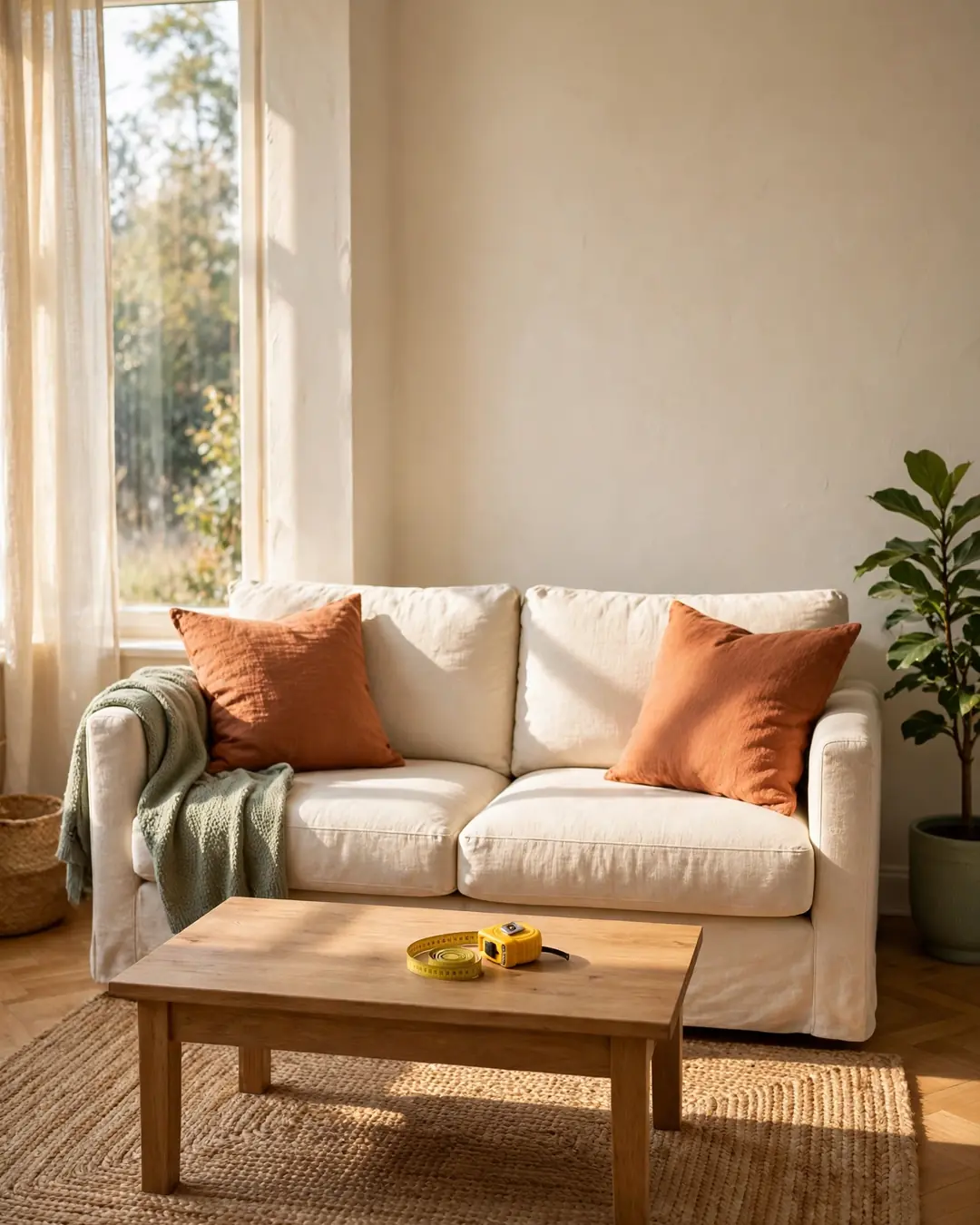
Right, pull up a chair, because I have seen this go wrong three times now, and every single time it started the same way.
A friend falls in love with a sofa online, orders it, and then discovers it will not fit through the front door. Or it fits, but it eats the whole room, and suddenly the coffee table lives in the hallway.
I have helped three friends pick sofas for small living rooms, and I swear by one rule above all the rest: measure twice, buy once.
Twenty ideas follow, each one small, each one practical, and every single one saves you from a sofa that fights your room instead of fitting it.
Measure first, then shop: your sofa size plan in 6 steps:
- Morning one: measure the wall where the sofa will sit, then measure the door and the hallway it must travel through.
- Morning two: work out your maximum width with the two thirds rule, then write it on a card you keep in your pocket.
- Afternoon: tape the sofa outline on the floor and live with it for a day, walking around it as you normally would.
- Evening: check the depth, the seat height, and the gap you need for the coffee table.
- Next morning: shortlist two or three sofas that fit the numbers, not the ones that only look pretty online.
- Then shop: sit on each one for ten minutes, check the legs and the frame, and buy the one that fits your room and your life.
1. Measure the Wall First, Not the Sofa

My friend Sara did this backwards, and honestly, most of us do. She found the sofa first, fell for the colour, and only then wondered if it would fit her wall.
It did not, not even close. Start with the wall. Measure its full length, write the number down, and let that number choose the sofa, not the other way round.
💡 Tip: Measure the wall twice, once at floor level and once at sofa back height, in case the skirting or a radiator steals a few centimetres.
2. Use the Two Thirds Rule for Sofa Width
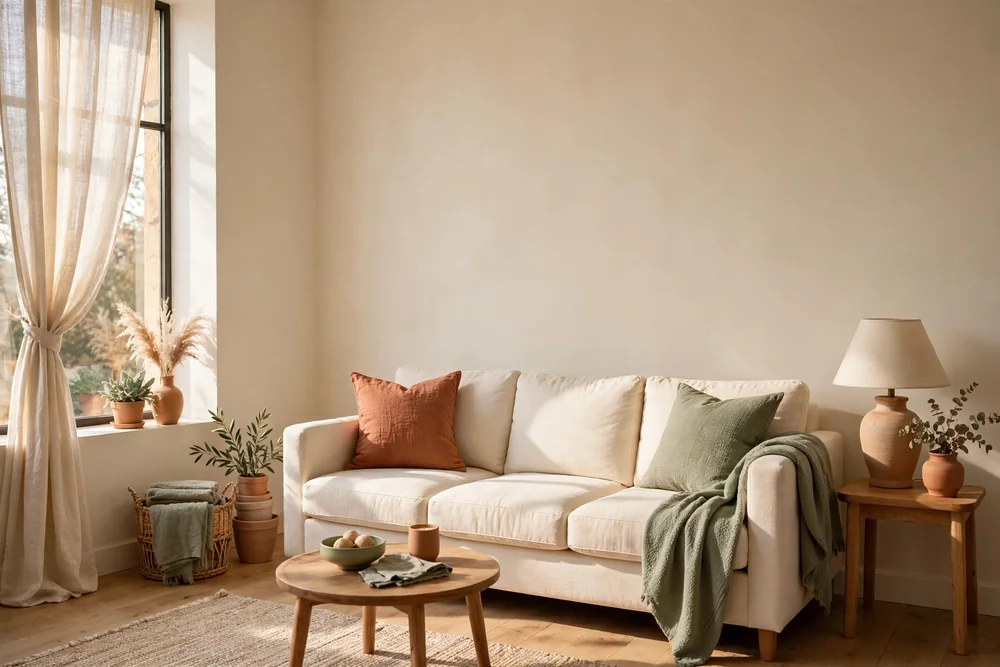
Here is the rule I give every friend, and it has never let anyone down. Your sofa should take up about two thirds of the wall it sits against, no more.
That leaves room for a side table, a lamp, and a little breathing space at each end. A sofa that runs wall to wall makes the room feel like a corridor, however pretty it is.
💡 Tip: Multiply your wall length by two thirds in your head, or just fold a tape measure into three and mark the spot. That mark is your maximum sofa width.
3. Try a Loveseat When the Wall Is Short

Some walls are just short, and no amount of wishing changes that. If your wall is under two metres, a loveseat is your friend, not a compromise.
Two people sit comfortably, the room keeps its walkways, and a small chair or a floor cushion can join in when a third person visits. My friend Aisha chose one and still thanks me every time she walks through her living room without turning sideways.
💡 Tip: Look for a loveseat with slim arms and a seat depth around 55 centimetres, so it seats two properly without hogging the floor.
4. Pick an Apartment Sofa for the Sweet Spot

Between the loveseat and the big three seater sits the apartment sofa, usually 170 to 200 centimetres wide, and honestly, it is the sweet spot for most small living rooms.
It seats three without dominating the wall, and it still leaves room for a side table and a lamp. If you are torn between sizes, start here. It is the size I suggest first, and the size most of my friends end up keeping.
💡 Tip: Ask the shop for the exact width in centimetres, not the name on the label. Sofa names are not standard, and one shop’s apartment sofa is another shop’s three seater.
5. Measure the Door and the Hallway Too

This is the measurement everyone forgets, and it is the one that causes the most returns. A sofa that fits your wall but not your hallway goes straight back on the truck, and nobody wants that phone call.
Measure the front door, the hallway, every turn, the stairwell, and the lift door if you have one.
Write down the smallest width on the whole route. The Homes Decors has a handy sofa size guide that walks through measuring the door and the hallway step by step, and it is worth a read before you order anything.
💡 Tip: Check whether the sofa legs come off. Removable legs can save a delivery that is two centimetres too tight, and many sofas offer them.
6. Tape the Outline on the Floor First

A tape measure tells you numbers, but tape on the floor tells you the truth. Mark the sofa outline with painter’s tape, then live with it for a day. Walk around it, open the doors near it, carry a laundry basket past it.
My neighbour did this and realised in one evening that her dream sofa would block the balcony door. She changed her order the next morning, and she still tells everyone about the tape trick.
💡 Tip: Put a couple of cushions inside the taped outline at sitting height, so you can see how much of the room the sofa will really claim.
7. Mind the Depth, Not Just the Width
Everyone measures the width, and almost nobody measures the depth, which is a shame, because depth is what eats your walkway.
A deep lounging sofa feels wonderful in a big room, but in a small one it pushes you too close to the television and makes the coffee table impossible to reach.
For most small living rooms, a seat depth around 55 to 60 centimetres is the comfortable middle ground.
💡 Tip: Sit on the sofa the way you actually sit at home. If your feet dangle or your knees sit higher than your hips, the depth is wrong for you, whatever the label says.
8. Choose Slim Arms to Win Back Inches

Here is a quiet little secret: the arms can steal ten centimetres or more from your sitting space.
Big rolled arms look grand in a showroom and eat your seat in a small room. Slim arms, or even track arms, give those centimetres back to the people sitting down.
Same sofa width on paper, noticeably more room for actual sitting. My friend who swapped a rolled arm sofa for a slim one gained a whole cushion of space, and she did not have to buy a bigger room.
💡 Tip: Measure the seat width between the arms, not just the total width. That is the number that decides whether two people sit comfortably or squash together.
9. Go Low and Leggy to Open the Floor

A low sofa on slim legs does something lovely in a small room: it shows a strip of floor underneath, and the eye reads that strip as extra space.
A sofa that sits flat on the floor hides the floor beneath it, and the room feels smaller for it.
Low backs help too, because they let more of the wall show above the sofa. It is a small visual trick, but in a room this size, small tricks add up to a room that breathes.
💡 Tip: Tapered wooden legs in a light finish lift the sofa visually, and they make cleaning underneath far easier too, which matters more than anyone admits.
10. Skip the Big Sectional Unless the Corner Earns It

Sectionals are tempting, I know. All that lounging space, all in one piece. But a big U shaped sectional will swallow a small room whole, and I have watched it happen.
The only sectional worth considering is a compact L shape that tucks into a corner and replaces both a sofa and a chair.
Measure the corner first, tape the outline, and if it leaves the walkways clear, it earns its place. If not, a sofa and a small chair will serve you far better.
💡 Tip: A compact sectional of 220 to 240 centimetres can work in a corner. Anything longer needs a bigger room, whatever the salesperson says.
Quick check, ideas 1 to 10 so far:
- Measure the Wall First, Not the Sofa
- Use the Two Thirds Rule for Sofa Width
- Try a Loveseat When the Wall Is Short
- Pick an Apartment Sofa for the Sweet Spot
- Measure the Door and the Hallway Too
- Tape the Outline on the Floor First
- Mind the Depth, Not Just the Width
- Choose Slim Arms to Win Back Inches
- Go Low and Leggy to Open the Floor
- Skip the Big Sectional Unless the Corner Earns It
11. Float It Only If the Walkway Allows

Floating a sofa away from the wall looks wonderful in magazines, and in an open plan room it can define the living zone beautifully. But it costs floor space, and in a room under twelve square metres that is often space you do not have.
You need 75 to 90 centimetres behind it for a comfortable walkway. If you cannot spare that much, keep the sofa against the wall. Nobody enjoys turning sideways to pass their own sofa.
💡 Tip: A slim console table behind a floating sofa makes it look intentional instead of stranded, and it gives you a home for a lamp and a book.
12. Match the Coffee Table Gap

The gap between the sofa and the coffee table matters more than people think. Too close and you cannot stand up without shuffling sideways; too far and you cannot reach your tea.
About 40 to 45 centimetres is the sweet spot, close enough to reach, far enough to move. Work this gap into your measurements before you buy, because a deep sofa plus a big table can eat the whole middle of the room.
💡 Tip: A round or oval coffee table forgives a tight room, because there are no corners to bump into on the way past.
13. Count the Seats You Actually Use

Be honest with yourself here, because this one saves real money and real space. How many people sit in your living room on a normal evening? If the answer is two, a three seater is mostly empty furniture.
Buy for the evenings you actually have, not the party you might throw once a year. A loveseat plus a floor cushion for guests beats a giant sofa that nobody fills, and your room will thank you every single day.
💡 Tip: Keep a folding stool or a big floor cushion tucked behind the sofa for visitors. It costs almost no space and saves you from buying seats you never use.
14. Try a Chaise Instead of a Full Sectional
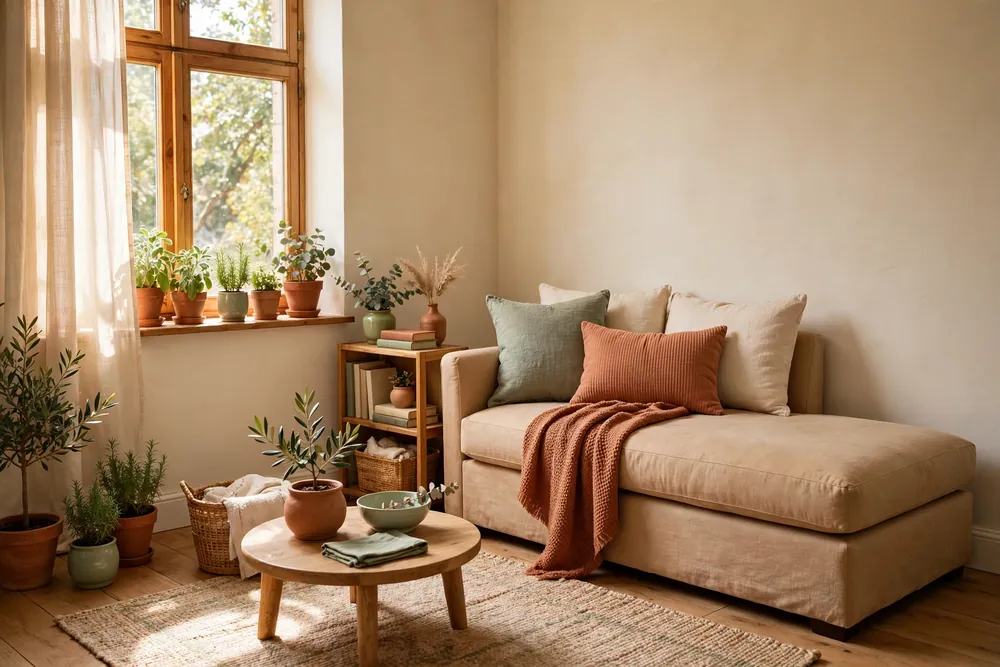
Love stretching out but short on space? A chaise sofa gives you the lounging end without the full sectional footprint. One long seat to put your feet up, the rest of the sofa a normal width, and the room keeps its shape.
My friend who reads every evening chose one over a sectional, and she says it was the best compromise she ever made. The chaise end goes against the wall, the room stays open, and everybody is happy.
💡 Tip: Check which side the chaise is on before you order, left or right, because a chaise on the wrong side blocks the walkway instead of opening it.
15. Pick a Sleeper Only If Guests Really Stay Over

A sofa bed sounds clever, and sometimes it is, but only if guests actually stay over. Sleeper sofas are deeper, heavier, and harder to move than normal sofas, and the bed mechanism eats sitting comfort.
If someone sleeps over once a month or more, it earns its keep. If it is once a year, an air mattress in the cupboard does the same job, and your everyday sofa stays comfortable.
I say this as someone who owned a sleeper for two years and opened it four times.
💡 Tip: If you do buy a sleeper, measure it opened out as well as folded. The bed needs floor space too, and that space has to come from somewhere.
16. Go Armless for Tight Corners

An armless sofa is the quiet hero of tight corners. With no arms at all, every centimetre of its width is sitting space, and it slides into spots a normal sofa cannot reach.
It looks modern, it feels open, and two of them can face each other in a small room without crowding it.
The trade off is nothing to lean on at the ends, so pair it with a couple of good cushions, and it will serve you beautifully.
💡 Tip: Armless sofas work brilliantly under a window, where arms would block the light and the view.
17. Let the Rug Set the Sofa Size

Here is a trick I learned the hard way: the rug and the sofa size each other.
A rug that is too small makes even a well sized sofa look lost, and a rug that is too big swallows a small sofa whole. The rule is simple.
The rug should be large enough that the sofa front legs sit on it, with at least 20 centimetres showing on each side.
If your rug is already bought, let it set your maximum sofa width, and the whole arrangement will look finished instead of accidental.
💡 Tip: If you are still choosing, read our rug size guide for small living rooms first, then match the sofa to the rug, not the other way round.
18. Check the Seat Height for Easy Sitting

Seat height is the measurement nobody talks about until their knees hurt. Too low and getting up feels like climbing out of a hole, especially for taller guests or older knees. Too high and shorter legs dangle.
Most sofas sit at 45 to 50 centimetres, which suits most people, but bodies differ, so test it.
Sit down, put your feet flat on the floor, and check that your knees sit level with your hips. That is your height, and it is worth finding before you pay.
💡 Tip: Bring the tallest and the shortest person in your household to the shop. If the seat height works for both of them, it works for everyone.
19. Test the Sit Before You Pay

Please, I beg you, do not buy a sofa you have never sat on. Ten minutes in the shop tells you what no review ever will.
Sit the way you actually sit at home, lean back, put your feet up if that is how you watch television, and check the arm height.
Too high and the sofa feels like a box, too low and it gives you nothing to lean on.
Lift one front corner a few centimetres too: if the other front leg lifts with it, the frame is solid, and that is a sofa worth paying for.
💡 Tip: Unzip a cushion cover if the shop allows it. Neat stitching and a proper inner cover are good signs, while loose filling and frayed seams are not.
20. Measure Twice, Buy Once
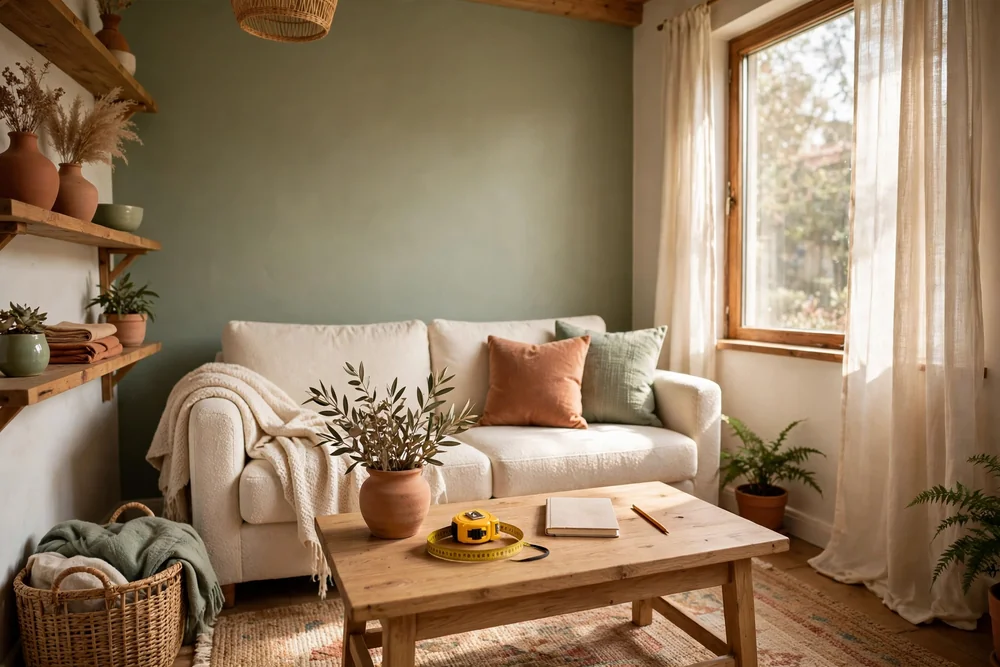
And here we are, back where we started, because this is the rule that holds all the others together. Measure the wall, measure the door, tape the outline, check the depth and the height, and then measure everything one more time before you pay.
Write the numbers on a card and keep it in your pocket when you shop.
A sofa is one of the biggest things you will buy for a small room, and ten careful minutes with a tape measure beats a month of regret every single time.
💡 Tip: Photograph your measurements and your taped floor outline, so you have them on your phone in the shop when the salesperson asks for numbers.
Quick check, ideas 11 to 20 so far:
- Float It Only If the Walkway Allows
- Match the Coffee Table Gap
- Count the Seats You Actually Use
- Try a Chaise Instead of a Full Sectional
- Pick a Sleeper Only If Guests Really Stay Over
- Go Armless for Tight Corners
- Let the Rug Set the Sofa Size
- Check the Seat Height for Easy Sitting
- Test the Sit Before You Pay
- Measure Twice, Buy Once
That is the full list! Twenty ideas, one small living room, and a sofa that finally fits the way it should. Measure twice, tape the outline, sit on it before you pay, and enjoy a room that feels bigger the moment the right sofa arrives.
Frequently Asked Questions
What size sofa fits a small living room?
An apartment sofa of 170 to 200 centimetres wide is the safest fit for most small living rooms. It seats three without dominating the wall, and it leaves room for a side table and a lamp.
A loveseat of 120 to 160 centimetres suits very small rooms, while a standard three seater of 200 to 230 centimetres needs a wall of at least 260 centimetres.
How much smaller should a sofa be than the wall?
Use the two thirds rule: the sofa should take up about two thirds of the wall it sits against. That leaves breathing space at each end for a side table and a lamp, and it keeps the room feeling open instead of crowded.
Is a sectional a good idea in a small living room?
Only a compact one. A small L shaped sectional of 220 to 240 centimetres can work in a corner, replacing a sofa and a chair. A large U shaped sectional will swallow a small room whole, so measure the corner and tape the outline first.
What depth sofa is best for a small living room?
A seat depth around 55 to 60 centimetres suits most people and most small rooms. Deeper seats feel like lounging but eat floor space you may not have, and shorter people end up with their feet dangling.
How do I know if a sofa will fit through my door?
Measure the front door, the hallway, every turn, the stairwell, and the lift door if you have one, then write down the smallest width on the whole route.
Compare that number with the sofa height and depth, and check whether the legs come off, because removable legs can save a delivery that is two centimetres too tight.
Keep the cozy feeling going with our cozy small living room ideas and our furniture arrangement guide for small living rooms, then match the rug to your new sofa with our rug size guide.
Browse our Small Apartment Decor ideas, or start from the beginning on our blog page.



1 thought on “What Sofa Size Fits a Small Living Room?”