
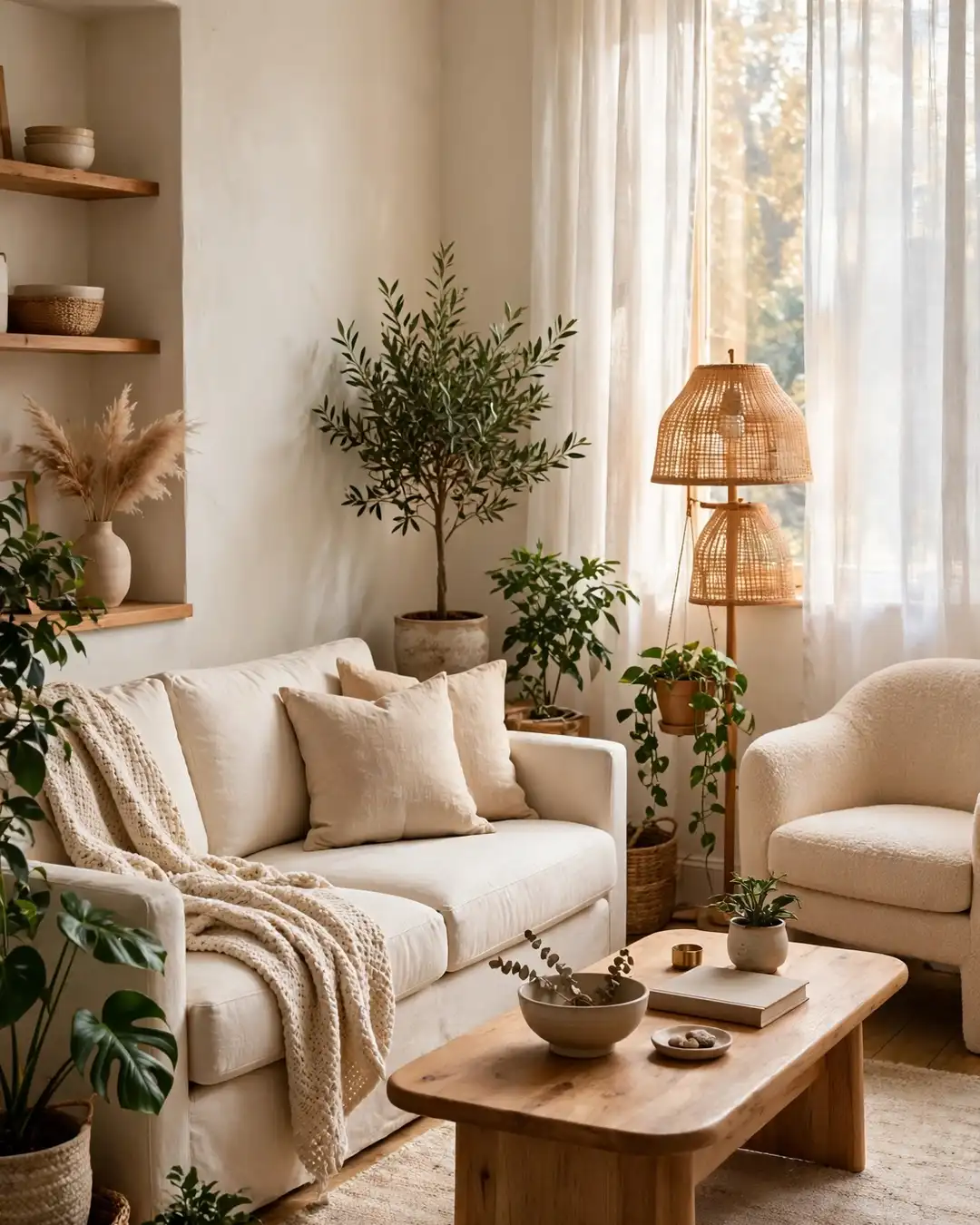
A small living room does not need less furniture. It needs furniture that knows where it belongs. When every piece has a clear place, the room feels calm, and moving through it feels easy.
These nine rules work in rentals and in rooms you own. Start at the top, take your time, and change one thing at a time. The room will tell you when it feels right.
1. Start With the Sofa on the Longest Wall
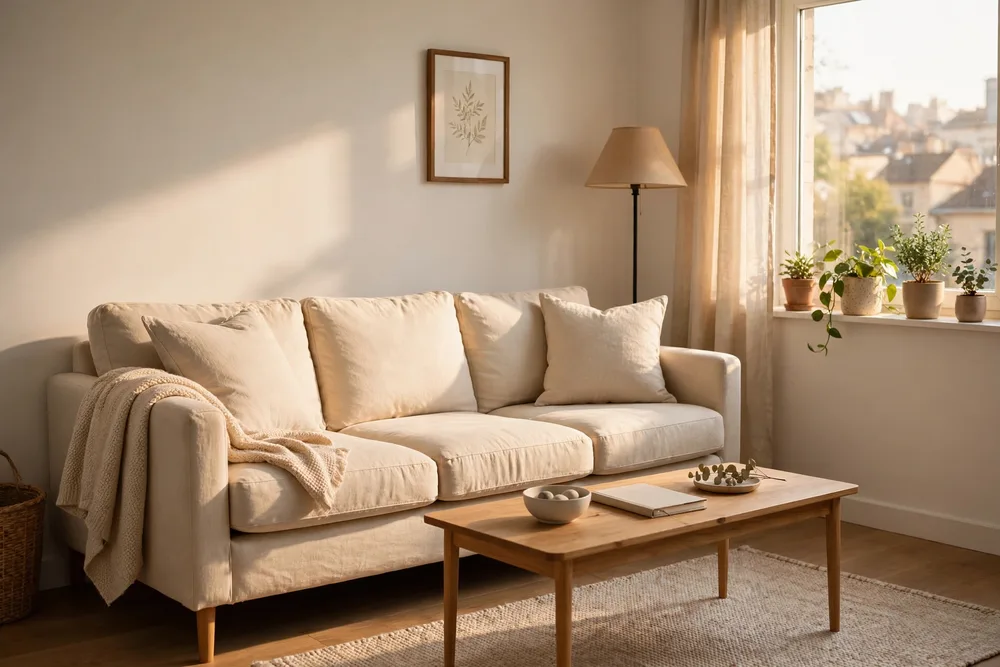
The sofa is the largest piece in the room, so it decides the layout. Place it against the longest wall first. Everything else, the chairs, the coffee table, the rug, gathers around it. Once the sofa settles, the rest of the room falls into place.
💡 Tip: Measure the wall before you buy. A sofa that is even a few inches too long makes the whole room feel crowded.
2. Leave a Walkway You Can Actually Walk Through

A walkway needs room to breathe. Leave 30 to 36 inches between the sofa and the TV console, and the same between the coffee table and the chairs. You should be able to cross the room with a mug in hand and never turn sideways.
💡 Tip: Walk the path yourself after you arrange the room. If you brush past a chair, shift the chair, not your route.
3. Float the Sofa When the Room Allows It

Pulling the sofa a foot or two off the wall can change everything. The space behind it becomes a walkway, and the seating area feels like a room of its own. A narrow console behind the sofa keeps the back view tidy.
💡 Tip: Try it for a week before you decide. A floated sofa feels strange on day one and natural by day seven.
4. Let One Rug Hold the Whole Seating Area Together
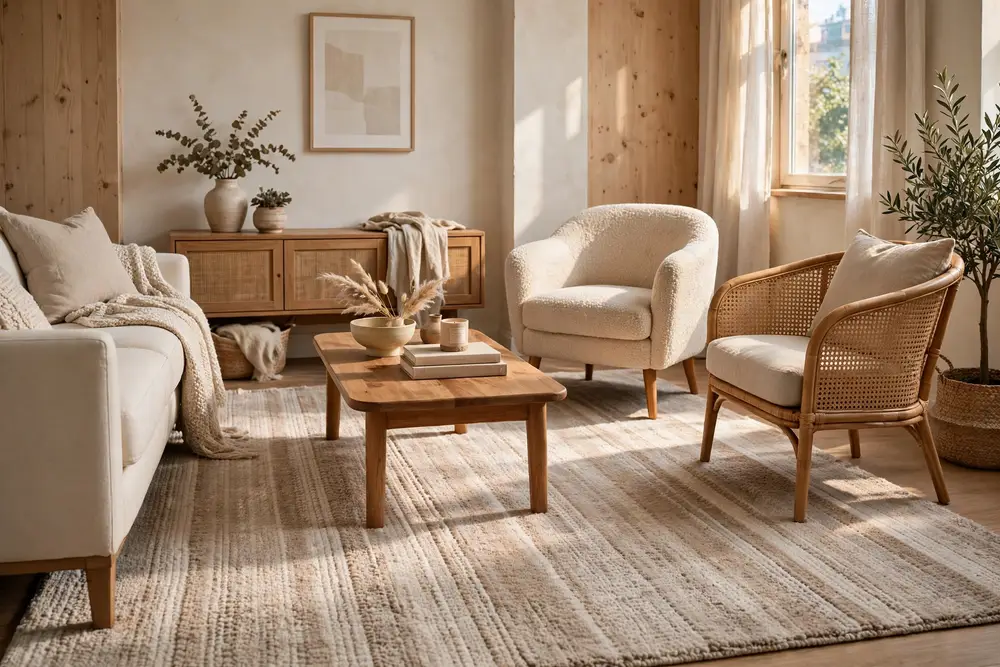
A rug is what turns scattered chairs into a group. Choose one large enough for the front legs of the sofa and chairs to rest on it. The coffee table sits in the middle, and suddenly the seating area has edges.
💡 Tip: When in doubt, size up. A rug that is slightly too big looks generous, while one that is too small makes the furniture look lost.
5. Hang the TV Where Your Eyes Naturally Rest

Your eyes should meet the screen without tilting your head. Mount the TV so its center sits at eye level from the sofa, usually around 42 inches from the floor. A low console underneath keeps cables hidden and the wall calm.
💡 Tip: Sit on the sofa and look straight ahead. If your chin lifts, the TV is too high.
Quick check, rules 1 to 5 so far:
- Start with the sofa on the longest wall
- Leave a walkway you can actually walk through
- Float the sofa when the room allows it
- Let one rug hold the whole seating area together
- Hang the TV where your eyes naturally rest
6. Give Every Seat a Place to Set a Drink
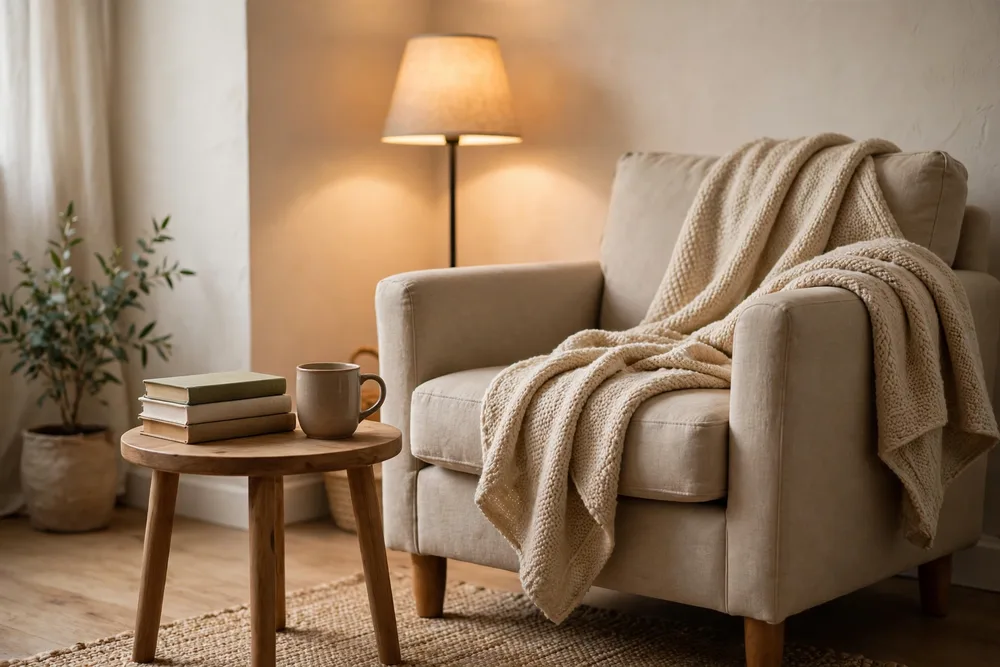
Nobody enjoys holding a drink through a whole conversation. Place a small side table or a slim stool beside every seat, close enough to reach without standing. A coffee table covers the middle seats, and side tables take care of the rest.
💡 Tip: A small stool doubles as an extra seat when guests arrive, then goes back to holding mugs.
7. Turn a Quiet Corner Into a Reading Spot
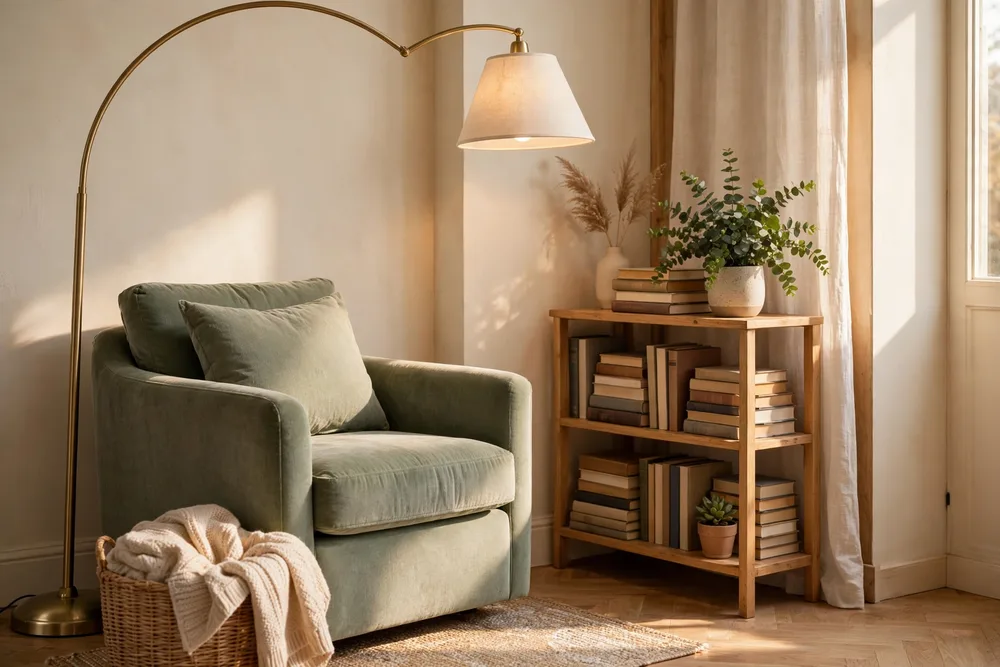
Every small living room has a corner that does nothing. Put a comfortable chair there, add a floor lamp and a small basket of books, and the dead corner becomes the most loved seat in the house. Quiet corners make a room feel bigger.
💡 Tip: Keep the lamp warm and low. A reading corner should glow, not glare.
8. Let the Daylight In Before You Add a Lamp

Before you buy another lamp, look at the window. Sheer curtains let daylight in while keeping the room private, and a mirror across from the window doubles the light. A bright room needs fewer lamps, and it feels larger through the day.
💡 Tip: Wash the windows and sheer curtains once a season. Clean glass can add more light than a new lamp.
9. Leave One Wall Empty on Purpose

A room with furniture on every wall feels busy, even when it is tidy. Leave one wall mostly empty, no shelves, no art gallery, no tall plant. The empty space gives your eyes a place to rest, and the room feels calm.
💡 Tip: If the empty wall itches to be filled, hang one small frame. One piece, not a gallery.
That’s the full list! Start with the sofa, clear one walkway, and let one rug gather the seating together. The rest follows naturally, and your small living room starts to feel like it was planned that way all along.
Frequently Asked Questions
How much space should I leave between the sofa and the coffee table?
Leave 14 to 18 inches between the sofa and the coffee table. That gap lets you sit down and stand up easily, and it leaves room to reach for a mug without stretching.
Can I float a sofa in a very small living room?
Yes, if the room is at least 11 feet wide. Pull the sofa 12 to 18 inches off the wall, add a narrow console behind it, and the walkway behind the sofa makes the room feel larger, not smaller.
What size rug should I buy for a small living room?
Choose a rug that fits under the front legs of the sofa and chairs, usually 8 by 10 feet in a small living room. A rug that is slightly too big always looks better than one that is too small. For a full size chart, see this living room rug size guide.
Where should the TV go in a small living room?
Mount it on the wall opposite the sofa, with the center of the screen at eye level when you sit down, usually around 42 inches from the floor. Keep the console low so the wall stays calm.
How do I arrange furniture in a rental I cannot change?
Use furniture placement alone. Float the sofa, use a rug to define the seating area, and add floor lamps instead of drilling. Nothing here needs a single hole in the wall.
If you want the room to feel even cozier once the layout is set, our cozy small living room ideas show how soft textures warm up the seating area, and our layered lighting ideas explain how lamps fill in the corners after dark. For the rug rule in more detail, see how to layer rugs in a small living room. Browse more ideas in our Small Apartment Decor category, or start from the beginning on our blog page.