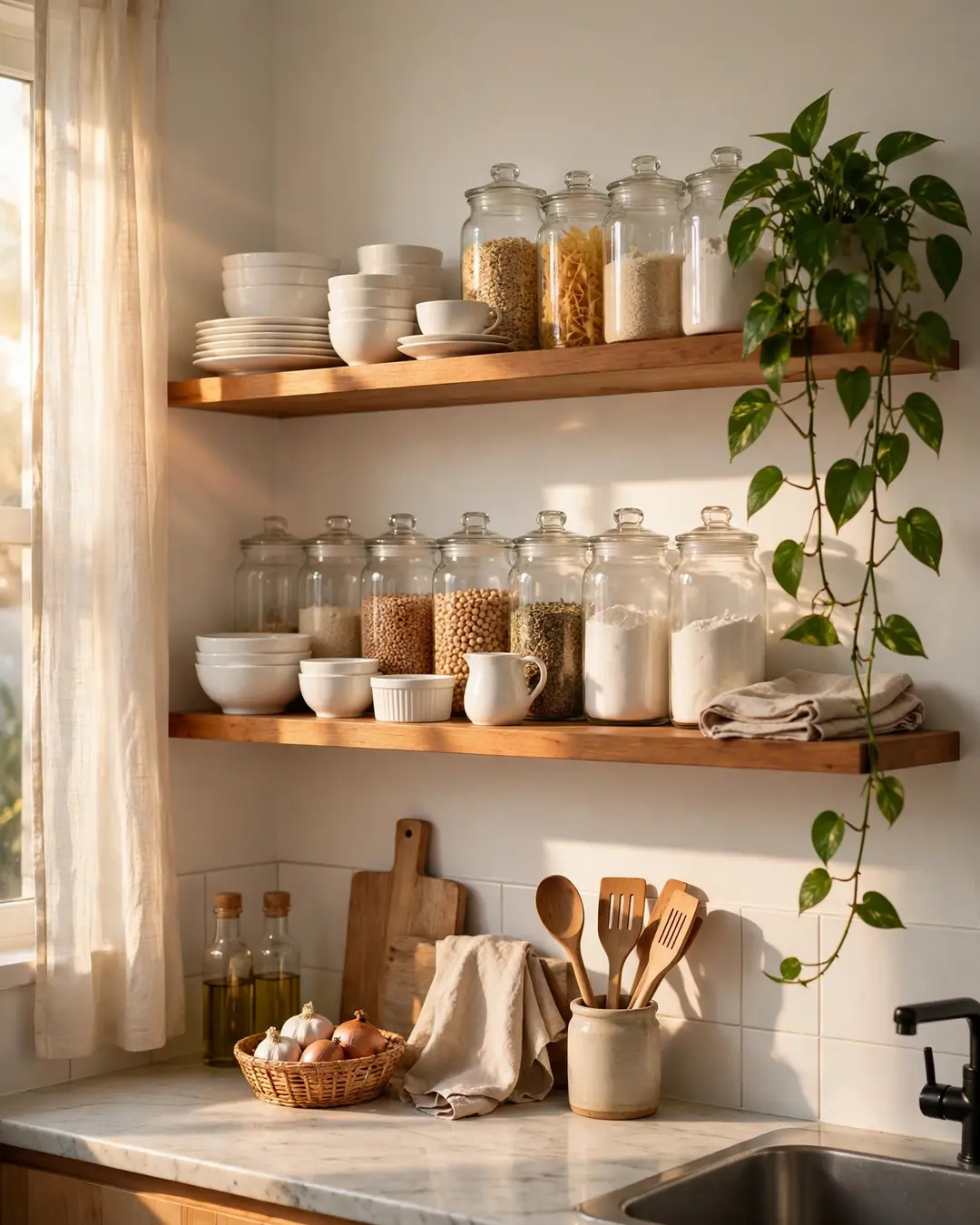
Open shelves either make a small kitchen or break it. Done well, they put your best plates on show and keep everything within reach. Done badly, they turn into a cluttered wall you avoid looking at.
These twelve ideas are hands on. Try them in order, one shelf at a time, and stop when the kitchen feels right. No new cupboards, no big spend, just shelves that work as hard as you do.
1. Start With One Empty Shelf

Take everything off one shelf first. Leave it bare on purpose. That empty stretch gives your eyes a rest and makes the shelves below it look styled, not stuffed. Start here, then build around it.
💡 Tip: Pick the shelf at eye level or just above it. One empty shelf is a statement, two empty shelves just look unfinished.
2. Anchor With Everyday Plates at Eye Level

Put the plates you actually use right where your hands land. Stack them in neat piles at eye level, bowls on top, and stop reaching up for dinner every night. The shelves work for you now, not the other way round.
💡 Tip: Keep stacks to six plates or fewer. Taller stacks wobble, and nobody wants a plate avalanche at breakfast.
3. Group in Odd Numbers

Grab three canisters, not two, not four. Odd groups feel natural to the eye, so set your three together, vary their heights a little, and leave space around them. The shelf suddenly looks styled, and you barely did anything.
💡 Tip: Mix three different heights in every group. Same height, same size, same look is what makes a shelf feel flat.
4. Repeat One Colour Down the Shelf

Pick one colour you already own, sage green, warm cream, deep blue, and let it show up on every shelf. A green bowl here, a green plant pot there, and the whole wall starts to feel planned. One colour ties everything together.
💡 Tip: Start with the colour already in your kitchen towels or rug. Matching what you own beats buying a whole new set.
5. Put the Heavy Things Low

Lift the cast iron pot down to the lowest shelf, right now. Heavy things belong low, where your arms can reach them safely and the shelf stays steady. Save the high shelves for light plates, cups and things you barely lift.
💡 Tip: If a shelf bows even slightly, move the heavy pieces down at once. A straight shelf is a safe shelf.
Quick check, ideas 1 to 5 so far:
- Start With One Empty Shelf
- Anchor With Everyday Plates at Eye Level
- Group in Odd Numbers
- Repeat One Colour Down the Shelf
- Put the Heavy Things Low
6. Mix Heights, Never One Flat Line

Stand back and look at the line across your shelf. If everything sits at the same height, break it up. Set a tall pitcher beside stacked bowls, tuck a short jar in front, and check this open shelving styling guide for more height tricks.
💡 Tip: Put the tallest piece at one end, not the middle. Height at the edge frames the shelf, height in the centre blocks it.
7. Give Every Shelf a Job
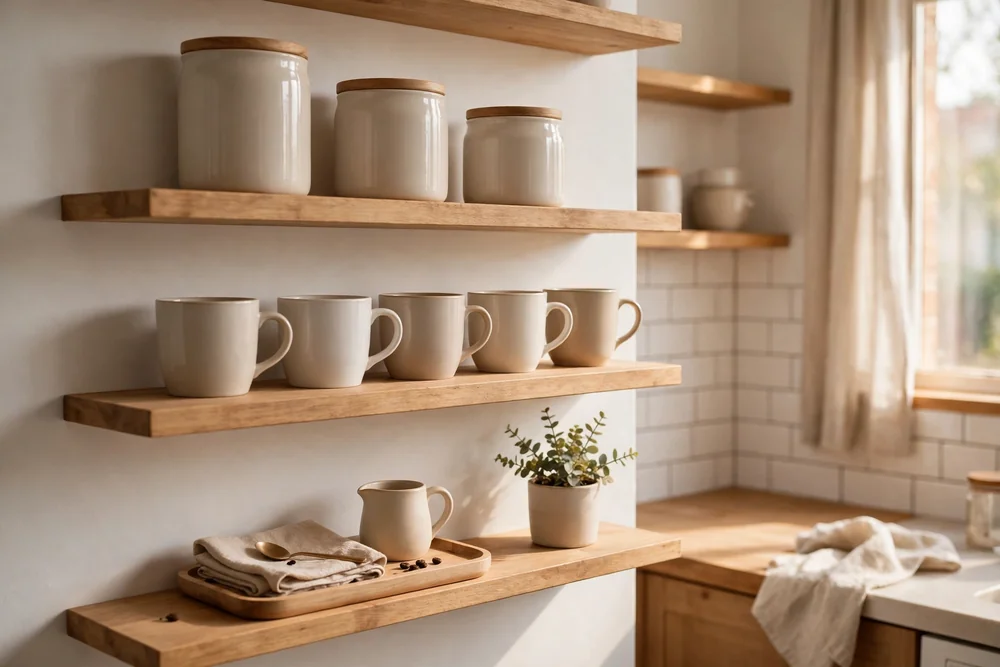
Name each shelf before you style it. Coffee shelf, breakfast shelf, baking shelf. Once a shelf has a job, you know exactly what belongs on it and what does not. Mugs, canisters and a tray turn one shelf into a coffee station.
💡 Tip: Keep the coffee shelf nearest the kettle. Short walks in the morning beat a pretty shelf on the far wall.
8. Add One Living Thing

Set a small pot of basil on the shelf and watch the whole kitchen wake up. Green softens wood and ceramic, and a trailing pothos pulls the eye along the shelf. Herbs earn their spot too, since you snip them straight into dinner.
💡 Tip: Pick herbs you actually cook with. Basil, mint and parsley survive kitchen shelves, fussy plants do not.
9. Let the Wall Show Through

Stop filling every inch. Leave gaps between groups so the pale wall shows through, and the shelf breathes. Those empty patches are not wasted space, they are what make the dishes beside them look chosen instead of crammed.
💡 Tip: Aim for about a third of each shelf left visible. If you cannot see wall, take one thing off and try again.
10. Corral the Small Stuff in Baskets and Jars

Gather the little things before they scatter. Tea bags, spice packets, spare lids, they all belong in a basket or a clear jar, not loose on the shelf. Corral them, label the jars, and the shelf looks calm even when the cupboard is chaos.
💡 Tip: Use clear jars for things you grab daily and baskets for the rest. You find things faster when you can see them.
Quick check, ideas 6 to 10 so far:
- Mix Heights, Never One Flat Line
- Give Every Shelf a Job
- Add One Living Thing
- Let the Wall Show Through
- Corral the Small Stuff in Baskets and Jars
11. Keep the Top Shelf for Display Only

Reach up to the top shelf and take down anything you use daily. That shelf is for display now, vases, a serving platter, the pretty pieces you love looking at. Keep a small step stool nearby and let the top shelf stay beautiful.
💡 Tip: Choose three display pieces for the top shelf, no more. A crowded top shelf looks cluttered from across the room.
12. Edit Once a Season

Set a date every season and pull everything off the shelves. Keep what you use and love, box up the rest, and put back only the best pieces. Four small edits a year keep your shelves fresh, and the kitchen never slides back into clutter.
💡 Tip: Edit with a box beside you. Anything you hesitate over goes in the box, and if you miss it, bring it back.
That’s the full list! Start with one empty shelf, anchor your plates at eye level, and give every shelf a job. Your small kitchen shelves can work hard every day and still look calm when you walk in.
Frequently Asked Questions
How many items should I put on each open shelf?
Aim for three to five groups per shelf, with breathing room between them. Fewer, larger pieces look calmer than many small ones, and leaving about a third of the shelf visible keeps the whole wall from feeling crowded.
What should I put on open kitchen shelves in a rental?
Stick to things you can move without tools, like plates, mugs, jars, baskets and plants. Avoid drilling extra brackets or hanging heavy pieces from the shelf itself, and keep the heaviest items low so the shelves stay safe.
How do I keep open shelves from looking messy?
Give every shelf a job, group things in odd numbers, and corral small items in baskets and jars. Edit once a season, and take anything off the shelf that you have not used in months.
Are open shelves practical in a small kitchen?
Yes, when the everyday dishes live at eye level and the top shelf stays for display only. Open shelves save you from opening cupboard doors in a tight space, and they make it easy to see what you own.
How do I style open shelves with mismatched dishes?
Repeat one colour across the shelves and group dishes in odd numbers, so different pieces still feel connected. Matching baskets and jars also help, since they pull the mixed dishes into one calm look.
Once your shelves feel settled, keep the momentum going with our small kitchen dining combo ideas and our small kitchen decor ideas, then steal more storage tricks from small space storage ideas that actually work. Browse the rest of our Small Apartment Decor ideas, or start from the beginning on our blog page.